White Noise Machines: What They Mask and What They Do Not
It is 11:40pm and the street below has not finished with the day. A bike without a silencer. Someone's dog. The lift motor. Then, once all of that finally stops, the person next to you starts snoring. You lie there fully awake, aware that the alarm is set for six. This is the specific misery that white noise machines are sold against, and in a dense Indian apartment block it is not an occasional problem.
How sound masking actually works
A white noise machine does not cancel anything. That is the first thing to get straight, because the marketing language around sleep gadgets blurs it. Noise cancelling headphones actively fight incoming sound waves. A sound machine simply adds more sound.
The reason that helps is how hearing works. What wakes you is rarely the absolute loudness of a noise; it is the sudden contrast against near-silence. A car horn at 3am in a quiet room is jarring. The same horn during a noisy afternoon goes unnoticed. A sound machine raises the constant background level so that sudden noises stick out less. The horn still reaches your ears. It just no longer arrives as a spike out of nothing.
Different sounds suit different problems. Broadband hiss, rain and fan sounds cover a wide range of frequencies and work well against traffic and voices. Deeper, lower sounds tend to suit snoring, which lives in the low register. Most machines offer a menu so you can find what covers your particular nuisance.
This is general information, not medical advice. Persistent sleeplessness, loud snoring with pauses in breathing, or daytime exhaustion despite enough hours in bed are worth raising with a doctor rather than treating with a gadget.
The features that matter
- Whether the sound loops audibly. This is the single biggest quality difference. Cheap machines play a short recording on repeat, and once you notice the seam you cannot stop noticing it. Better ones use longer samples or continuously generated noise.
- Volume range. You need enough headroom to actually cover street noise, and a low enough minimum to be usable in a small bedroom without being oppressive.
- A timer, and the option to ignore it. Some people want it to switch off after an hour. Others need it running all night, because the machine going silent at 2am is exactly the contrast that wakes you.
- Night light behaviour. Useful for feeds and nappy changes, actively harmful if it cannot be dimmed or switched off, since light in the room works against sleep.
- Battery or mains. A battery model keeps working through a power cut, which in many Indian cities is a genuine consideration on a summer night. Mains-only machines fail exactly when the fan and AC do.
- Memory. A machine that remembers your last sound and volume saves a fiddle in the dark every night.
Where they genuinely help
Steady, unavoidable external noise is the best case. Main-road traffic, a construction site, a generator, a neighbour's television through a shared wall. You cannot fix any of those, and masking is a reasonable answer.
Snoring partners are the second case, and often the reason the machine gets bought at all. It will not silence snoring, but it flattens the peaks enough that many people stop waking on every one.
Babies and small children are a large part of this market for a real reason: a consistent sound cue at bedtime becomes an association, and the masking keeps a doorbell or a pressure cooker from ending a nap. Keep the machine well away from the cot and at a low volume rather than near a baby's head.
Light sleepers in shared accommodation, hostels and joint family homes get the same benefit, and a small machine travels better than trying to negotiate silence.
Where they disappoint
They do nothing about vibration and impact. Footsteps from the flat above, drilling, a slamming door in the corridor: these arrive partly through the structure of the building, not just the air, and no amount of added sound covers that.
Some people simply cannot sleep with continuous noise, and find the hiss more intrusive than what it was masking. There is no way to know which camp you are in until you try.
Sound quality on small speakers is a limitation. A tiny driver reproducing rain sounds can come out thin and tinny, and thin hiss is more annoying than full, warm noise.
There is also a dependency question. Get used to sleeping with masking every night and a silent hotel room can feel oddly difficult. That is manageable, but worth knowing before you build the habit.
Who should skip one: if your sleep problem is a racing mind, caffeine late in the day, or a screen in bed, a machine treats none of that. If the noise you are fighting is impact and vibration, look at the source instead. And if you already sleep well with a ceiling fan running, you have effectively had a white noise machine for years and do not need to buy one.
Using one sensibly
Set the volume as low as still does the job. Louder is not better, and for children in particular it is worth keeping the machine several feet from the bed and well below the level of a normal conversation. Place it between you and the source of the noise, closer to the window or door rather than beside your pillow.
Give any new sound a full week before deciding. The first two nights with added noise almost always feel worse, because you are listening to it rather than through it.
Keep the vents free of dust, and in humid months do not park it on a windowsill that gets damp. If it has a battery, run it down and recharge occasionally rather than leaving it permanently plugged in.
The one we have listed
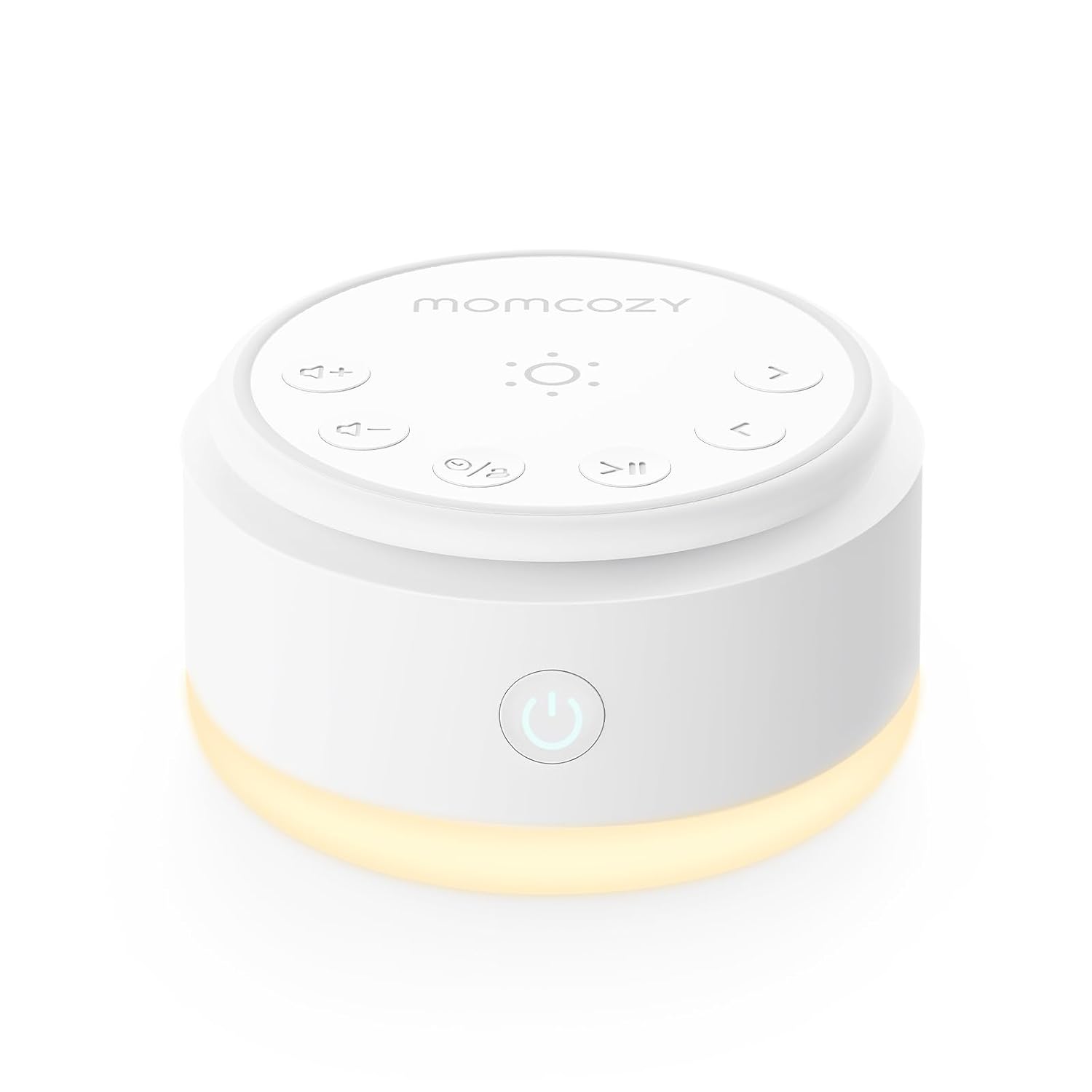
We list the Momcozy White Noise Sound Machine at Rs 2,924 on Amazon.in, rated 4.4 stars, though from a modest 38 or so ratings, so treat that average as early rather than settled. It offers twenty sounds, a warm night light and a timer, which covers the feature checklist above including the night light and timer options that matter most to parents. Momcozy is a baby-gear brand, and the design reflects that: this is aimed at a nursery bedside as much as an adult bedroom.
If you would rather block noise than mask it, the Loop Quiet 2 Reusable Earplugs at Rs 1,799 solve the same problem from the opposite direction, and our earplug guide covers where that approach falls short. At the higher end, Soundcore Sleep A20 earbuds combine masking and blocking, at a considerably higher price.
Prices on Amazon.in shift often. Check the store page before buying.
Common questions
Is white noise safe for babies?
Used at low volume and placed away from the cot, it is widely considered fine. Keep it well below conversation level and never right beside a baby's head. Ask your paediatrician if unsure.
Can I just use a phone app instead?
You can, and it is a sensible way to test whether masking works for you. A dedicated machine wins on speaker quality, not needing your phone in the bedroom, and not looping obviously.
Will it stop my partner's snoring waking me?
It reduces how sharply each snore stands out. It does not remove the sound, and it does nothing for very loud snoring.
Should it run all night or on a timer?
All night is usually better if outside noise continues through the night, because a machine switching off can itself wake you.
Disclosure: TechBelievers lists products from Amazon.in and other stores as an affiliate. If you buy through our links we may earn a commission, at no extra cost to you. Prices are checked periodically and change often on the store's own site.