Electric Shoe Dryers: What They Fix About Monsoon Shoes
You get home at eight with both shoes soaked through. You stuff them with newspaper, park them under the ceiling fan and go to bed. At seven the next morning the outside feels dry, and then you put your foot in and the insole is still cold and damp. You wear them anyway. Do that four days in a row and the shoe acquires a smell that never fully leaves it.
That is the actual monsoon problem, and it is not really about water. It is about time. A wet shoe left to dry on its own takes twenty-four to forty-eight hours, and most people only have one pair they can wear to work.
Why shoes dry so badly on their own
Evaporation needs three things: heat, moving air, and somewhere for the moisture to go. The inside of a shoe has none of them. It is a closed cavity with one small opening at the top, packed with foam and fabric that hold water the way a sponge does. Air does not circulate in there. The moisture that leaves the insole has nowhere to travel to.
Newspaper works on the third problem only — it wicks water out of the foam by contact. It does nothing about heat or airflow, which is why it needs changing every few hours and still leaves you damp by morning.
A ceiling fan works on the second problem, but only for the outer surface. Almost none of that moving air reaches the toe box.
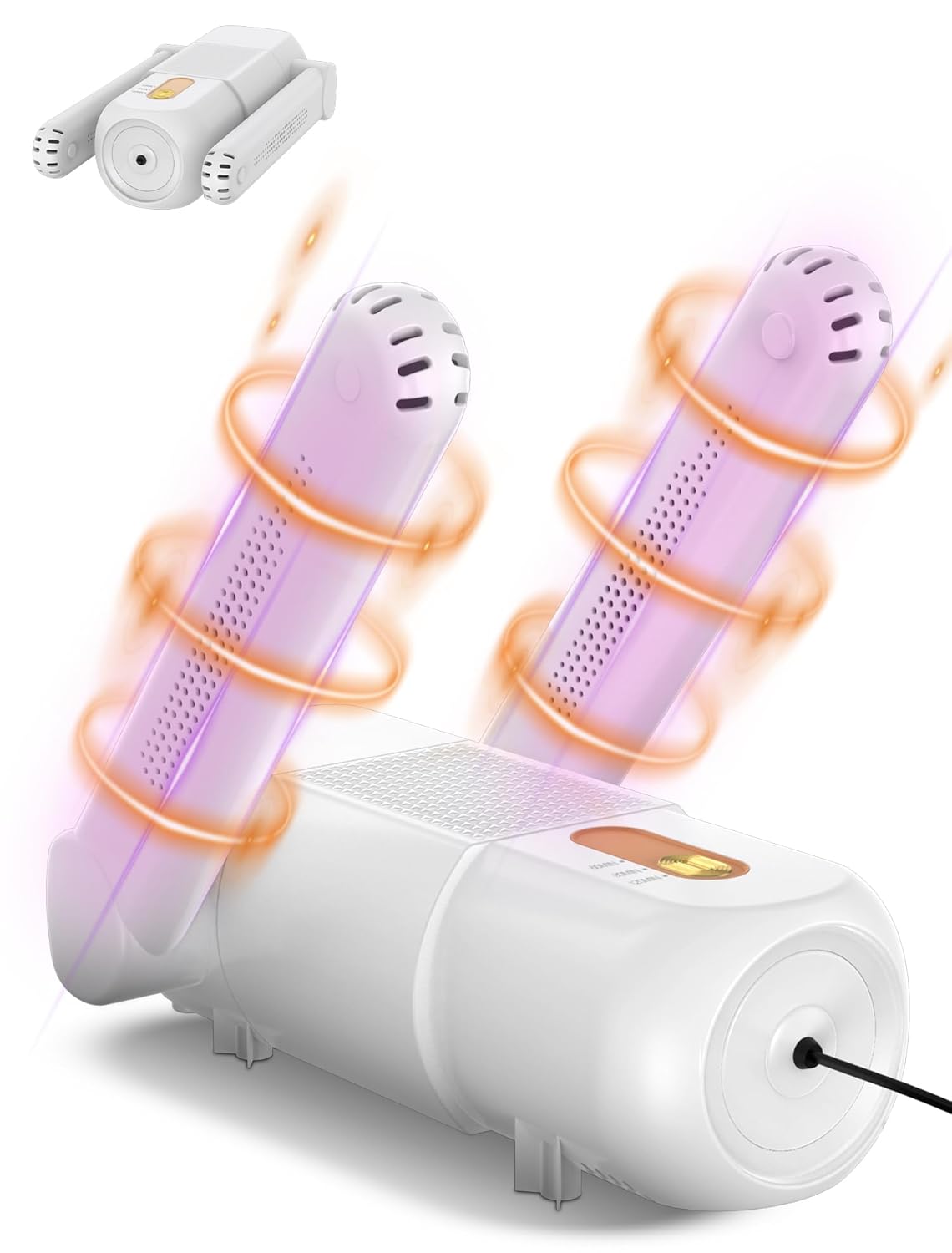
An electric shoe dryer attacks all three at once. It puts a heating element and a small fan physically inside the shoe and pushes warm air out through the cavity, so the wettest, most enclosed part of the shoe gets the airflow instead of the part that was already going to dry anyway.
The specs that matter
Where it genuinely helps
The single-pair problem is the main one. If you own one pair of formal shoes and it rains on Monday, a dryer is the difference between wearing them dry on Tuesday and wearing them damp for the rest of the week.
Sports shoes after a run or a gym session, where sweat rather than rain is the moisture source and the smell builds far faster.
Kids' school shoes, which get soaked at a rate adults find hard to believe and which have to be back on their feet at seven the next morning without exception.
Shoes stored in a closed shoe rack, which in a humid coastal city is where fungus quietly happens. A cycle before they go back in the rack is meaningfully better than putting a damp shoe into a dark box.
And most units will also take gloves, socks and caps on the same arms, which is more relevant in the hills than in Chennai but worth knowing.
Where it disappoints
It does not remove existing smell. This is the expectation most people arrive with and the one most likely to be disappointed. If a shoe already smells, the bacteria are established deep in the foam and warm air will not evict them. A dryer prevents the problem from getting worse; it is not a cure for a shoe you have already ruined.
It will not rescue a shoe that has been fully submerged. Something soaked right through the sole may need several cycles, and the leather may have changed shape by then regardless.
It is risky on some materials. Glued leather shoes, patent finishes and anything with a delicate adhesive can suffer from repeated heat. If a shoe is expensive and leather, use the lowest setting, keep cycles short, and accept that air drying over two days is gentler.
It handles one pair at a time. A household of four coming home wet on the same evening will be queueing.
And there is the obvious alternative: a second pair of shoes costs about what a dryer costs, solves the same problem with no electricity, and gives each pair a full day to dry naturally. If you can rotate two pairs, that is genuinely the better answer for most people.
Who should skip it: anyone who already owns two wearable pairs, anyone whose shoes are expensive glued leather, and anyone hoping to fix a smell that already exists.
Using it without wrecking the shoe
Take the insole out and dry it separately alongside. It holds the most water and is the part that smells, and it dries far faster in open air than it does buried inside the shoe.
Loosen the laces fully and open the tongue so the warm air has somewhere to exit. A closed shoe traps the moisture you just lifted out of the foam.
Knock the loose mud off before the cycle. Drying mud into the shoe bakes it in.
Run the shorter cycle first and check. Most shoes are done well before the maximum timer setting, and the extra heat is doing nothing useful after that point.
Do not run it inside a sealed shoe cabinet. The moisture has to go somewhere and a closed cupboard just returns it.
The one we have listed
The Aissom Electric Shoe Dryer with UV Lamp and 120-Minute Timer is listed at Rs 1,708 on Amazon.in, down from Rs 1,899, with a 4.4 star rating across 275 ratings. It folds, slides into a pair, runs warm air with a UV lamp alongside it, and shuts off on its own at up to 120 minutes. The folding arms also take gloves, caps and socks.
If the underlying issue is a humid cupboard rather than wet shoes specifically, moisture absorber sachets address that at the storage end, and a retractable clothesline handles the rest of what a monsoon leaves you with.
Common questions
How long does a pair actually take?
Lightly damp sports shoes are usually done in under an hour. Properly soaked leather or thick boots can need the full two hours or a second cycle. Wet through to the sole may take longer still.
Is the UV lamp safe?
Inside a shoe it is enclosed and pointed away from you. Do not look directly at a UV-C source and do not run it out in the open. Follow whatever the manufacturer says about operating it outside a shoe.
Will it work on leather shoes?
Yes, with care. Use the lowest setting and shorter cycles. Repeated high heat is what dries out leather and stresses the glue, so a gentle cycle a few times beats one aggressive one.
Does it kill the fungus causing my athlete's foot?
Drying a shoe removes the damp environment fungus needs, which helps prevent reinfection from footwear. It is not a treatment for a skin condition. This is general information, not medical advice — if you have a persistent foot infection, see a doctor.
Disclosure: TechBelievers lists products from Amazon.in and other stores as an affiliate. If you buy through our links we may earn a commission, at no extra cost to you. Prices are checked periodically and change often on the store's own site.