Drain Hair Catchers: What Actually Stops a Slow Bathroom Drain
The water was ankle deep by the end of the shower. Not blocked exactly, just slow, and slower every week for the last two months. Then somebody fishes a wire hanger down the drain and pulls up a grey, soap-soaked rope of hair the size of a small animal, and everyone in the flat quietly agrees never to speak of it again. Two months later it starts again.
What is actually blocking your drain
It is almost never one thing. Hair goes down, catches on the pipe wall or on the crossbar of the drain fitting, and forms a net. Then soap, conditioner, body oil and hard water minerals stick to the net. Over weeks it turns from a few strands into a solid plug that water has to squeeze past.
Two things make this worse in Indian bathrooms specifically. Hard water leaves scale that gives the hair something to grip, so the same amount of hair clogs faster than it would in a soft-water city. And bathroom floor drains often sit at the end of a short, shallow run, which means the clog forms close to the opening where it slows everything down quickly.
The important part is that the clog starts at the top, near the drain fitting. That is why catching hair before it enters is such a disproportionate win. You are not preventing a plumbing problem so much as preventing the seed of one.
The two shapes, and why one keeps failing
The familiar design is a flat mesh or perforated disc that sits over the drain like a lid. It works for about ninety seconds. Hair collects on top of it, water pools on the surface because the holes are now covered, and you end up standing in a puddle. So people lift it off, and once it is off, it stays off.
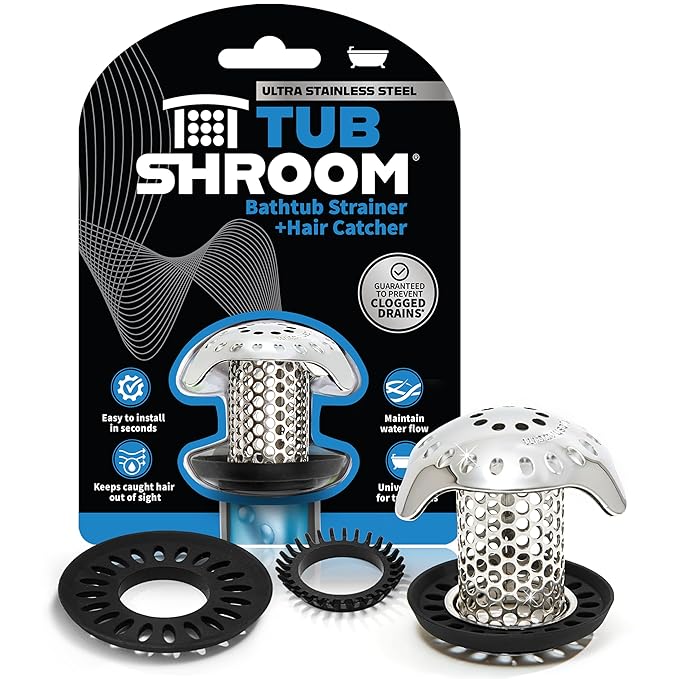
The other design sits inside the drain, shaped like a small mushroom or cylinder. Water goes down the middle and around the sides. Hair wraps around the outside of the body rather than lying across the opening, so the water path stays clear even when the catcher is covered in hair. That is the whole design argument, and it is a good one.
What to check before buying
Where it genuinely helps
The obvious case: a household with long hair. One or two people with long hair will clog a bathroom drain within months, reliably, forever. A catcher turns that into a weekly ten-second job.
Renting is the strong case. You cannot call a plumber to open the trap in a flat you do not own without a conversation with the landlord, and drain chemicals are exactly the thing that damages old pipes and gets deducted from a deposit. A cheap physical barrier avoids the whole situation.
Where it disappoints
It only stops new hair. If your drain is already partly blocked, a catcher will not clear it. You have to open and clean the drain first, otherwise you will conclude the catcher does not work when in fact it never had a chance.
It still needs cleaning, and if you leave it a month it will smell. This is not a fit-and-forget device. It is a fit-and-wipe-weekly device, and people who buy it expecting the former are the ones who leave bad reviews.
Fit is genuinely hit and miss. Bathroom drain fittings in India are not standardised, and a catcher shaped for a Western shower drain may sit awkwardly or not at all in a floor jali. Returns for fit are common with this whole category.
It does nothing about soap scum and hard water scale, which build up on the pipe wall regardless. A catcher slows the clog cycle down considerably. It does not eliminate it.
Skip it if your drain has a fixed grate you cannot lift, if nobody in the house has long hair, or if your slow drain is slow for a different reason such as a badly sloped pipe or a blocked trap further down. A catcher will not fix plumbing.
Living with one
Rinse it under the tap once a week. Wipe the outside with tissue first, then rinse, otherwise you are washing hair straight back into the drain.
Once a month, take it out, scrub the stem with an old toothbrush and a little dish soap, and pour a kettle of hot water down the open drain to shift soap film. Hot water and a brush do most of what chemical cleaners claim to do, without the pipe damage.
Before you install one for the first time, clean the drain properly. Whatever is already down there is not going to leave on its own.
The one we have listed
We have the TubShroom Drain Hair Catcher listed at Rs 2,837 on Amazon.in, rated 4.6 out of 5 from more than 32,000 ratings. That review count is the notable thing. Very few bathroom accessories accumulate thirty thousand ratings, and a 4.6 average across that many is a strong signal that the basic design works as described.
It uses the in-drain approach, sitting inside the opening so hair collects around the outside while water keeps flowing through and past it. Cleanup is a wipe rather than a pick.
The honest caveat is price. Rs 2,837 is a lot for a piece of moulded silicone, and it reflects that this is an imported branded product rather than a generic one. Cheaper in-drain catchers exist and some work fine. What you are paying for here is a shape that has been tested by a very large number of people and a fit that is consistent. If you have already bought and returned two that did not fit, that consistency is worth something. If this is your first attempt, a cheaper one is a reasonable experiment, provided you measure your drain first.
Two related listings: a stainless steel sink strainer basket for the kitchen sink, which has the same problem with food waste, and a cordless electric spin scrubber if the bathroom floor and tile grout are the next thing on the list.
Common questions
Will it fit an Indian bathroom floor drain?
Sometimes. Measure the inside diameter of your drain opening first and compare it against the listed size. Floor jali fittings that are fixed in place or unusually wide are the common failure case.
How often do I need to clean it?
Weekly for a household with long hair, every two weeks otherwise. Leaving it longer is what causes the smell people complain about.
Will it slow the water down?
A properly fitted in-drain catcher should not, because water flows around it. If your water is draining slowly with one fitted, either the fit is wrong or the drain was already partly blocked.
Is it better than a drain cleaning chemical?
They do different jobs. A catcher prevents new hair getting in. Chemicals dissolve what is already there, at some cost to older pipes. Clear the drain first, then use a catcher to keep it clear.
Disclosure: TechBelievers lists products from Amazon.in and other stores as an affiliate. If you buy through our links we may earn a commission, at no extra cost to you. Prices are checked periodically and change often on the store's own site.