Vacuum Storage Bags: What They Save and What They Ruin
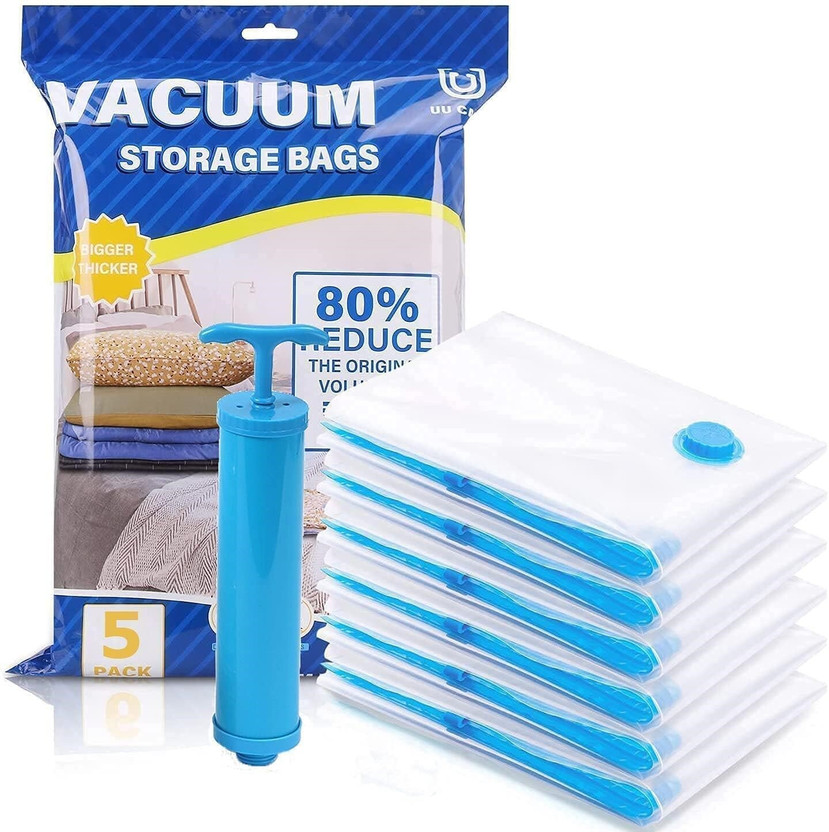
The top shelf of the almirah holds two quilts, a woollen blanket nobody has used since a Shimla trip in 2019, and a spare duvet. That is one entire shelf gone, in a flat where storage is the thing you have least of. Squash all four into vacuum bags and they occupy about the depth of a stack of textbooks. That is the whole pitch, and for bedding it is largely true.
What is actually happening inside the bag
Bedding is mostly air. A quilt is fibre with enormous gaps between the fibres, and those gaps are what makes it warm and what makes it bulky. Pull the air out and the fibres collapse against each other. You are not compressing the material so much as deleting the empty space around it.
This is why the results are so uneven across items. A polyester-filled quilt shrinks to perhaps a fifth of its size. A pile of folded cotton T-shirts barely shrinks at all, because there was not much trapped air to begin with. If you are planning to vacuum-pack your entire wardrobe, expect the loose fluffy things to deliver almost all of the benefit.
The bag itself is a multi-layer plastic with a one-way valve and a zip-style seal along the top. The valve lets air out while the pump runs and closes when it stops. The seal is the part that fails, and it is worth understanding before you buy: most leaks come from a wrinkle in the zip track or a stray fibre caught in it, not from a puncture.
Pump or no pump
Cheaper sets expect you to attach your household vacuum cleaner hose to the valve. That works and it is fast, but it means dragging the vacuum out, and it only works if you have a hose that matches the valve diameter — many Indian handheld and stick vacuums do not.
Sets that include a small electric pump are more expensive but self-contained. The pump is slower than a full-size vacuum cleaner, so a large bag can take a few minutes. The upside is that you can re-seal one bag in the middle of the season without setting up the whole vacuum.
There is also a hand-pump version. Avoid it for anything larger than a cushion. Getting a duvet-sized bag flat by hand is genuinely tiring and you will not do it twice.
Where they genuinely help
Seasonal bedding is the clear win — quilts, blankets, duvets, mosquito nets. These are bulky, used a few months a year, and unaffected by being squashed.
Woollens for storage are the second case, with a caveat below. The sealed bag keeps out dust, silverfish and, importantly in Indian conditions, moths. A sealed bag is a far better moth defence than naphthalene balls in an open shelf.
Moving house is the third. Compressed bedding stacks into a car boot in a way that loose quilts never will, and the plastic protects everything from the inevitable dusty truck.
Storing off-season clothes for a rental you are about to leave, or for the space above a wardrobe you cannot easily reach, is where most people get their money back. It is a storage tool, not a laundry tool.
Where they disappoint, and what they ruin
Down and feather items should not be vacuum-compressed for long periods. The quills break under sustained pressure and the item never fully lofts again. The same applies, less severely, to good-quality wool — long-term compression flattens the crimp in the fibre and the garment comes out limp.
Anything with structure loses it. Suits, formal shirts, structured jackets, anything with padding at the shoulder. It will come out creased in ways that take steaming rather than ironing to fix.
Leather and anything coated will crease permanently. Do not put a leather jacket in a vacuum bag.
Then there is the damp problem, which is the one that catches people out in India. If you seal a slightly humid item in an airtight bag in June, you have made a small greenhouse. Compressed fabric with moisture in it and no airflow grows mildew over a monsoon, and the smell does not wash out easily. Everything must be completely dry — sun-dry it or run it through a dryer — before it goes in.
Bags also re-inflate. Not all of them, not always, but a slow leak over three months is common and you will find a half-puffed bag when you go looking. Cheap sets are worse. Treat re-inflation as a normal maintenance job rather than a defect.
Who should skip these: anyone with plenty of cupboard space, and anyone storing expensive down, wool or leather for more than a season. For those items, a breathable cotton garment bag is the correct answer.
Getting a seal that holds
Fold items flat rather than rolling them, and do not overfill — leave a clear hand's width between the contents and the zip. Most seal failures are just fabric intruding into the track.
Run a finger or the plastic clip slowly along the zip twice, in both directions. It should feel like a continuous ridge with no soft spots. Then wipe the area around the valve before pumping, because dust on the valve seat is the second most common leak.
Do not compress to the absolute maximum. A bag squeezed until it is rock hard puts constant strain on the seams, and the corners are where punctures start. Stop when the bag is firm.
Store the flat slabs lying down, not on edge, and keep them off rough concrete and away from anything sharp. Label them, because a compressed quilt looks exactly like another compressed quilt and you will not be opening these until next winter.
The one we have listed
We list a 4-pack of vacuum storage bags with an electric pump at Rs 435 on Flipkart. The pump is the part that makes this set worth the price over a bare-bags pack — you are not tied to owning a vacuum cleaner with a matching hose.
At roughly a hundred rupees a bag it is a low-risk purchase for seasonal bedding. Judge it on that job. If you are hoping to compress a whole wardrobe of everyday clothes, you will be disappointed by how little those shrink. For clothes that travel rather than clothes that sit, compression packing cubes are the better tool, and if you are doing a general wardrobe reset, the electric lint remover is the other cheap thing that makes old woollens look presentable again.
Common questions
Can I vacuum-pack a down jacket or feather quilt?
For a short move, yes. For a whole season, no — sustained compression damages the quills and the loft does not fully return. Store down loosely in a breathable bag instead.
Why does my bag puff up again after a few weeks?
Almost always a slow leak at the zip seal rather than a hole. Re-run the clip along the track, check for a trapped thread, and re-pump. Some seasonal re-pumping is normal.
Do they protect against moths and silverfish?
A properly sealed bag does, and it does it better than loose naphthalene. But sealing in any existing larvae also seals in the problem, so wash and fully dry everything first.
Are the bags reusable?
Yes, typically for several years if you avoid over-compressing and store them away from sharp edges. Small punctures near the corners are what eventually kills them.
Disclosure: TechBelievers lists products from Amazon.in and other stores as an affiliate. If you buy through our links we may earn a commission, at no extra cost to you. Prices are checked periodically and change often on the store's own site.