Sleeping Through Noise: What Reusable Earplugs Do and Do Not Fix
If you live anywhere near a main road in an Indian city, sleep is a negotiation. Trucks at 2 am, a wedding two lanes over, the neighbour's generator, a partner who snores. Most people put up with it, sleep badly, and blame their mattress.
Earplugs are the cheapest thing you can try. They are also the thing people give up on fastest, usually because of a bad first experience with hard foam plugs from a chemist.
What the decibel number actually means
Earplug packaging quotes either an SNR figure, common in Europe and India, or an NRR figure, used in the United States. Both are laboratory numbers produced under ideal fit conditions, and both are widely misread.
An SNR of 24 dB does not mean the world goes quiet. It means that under test conditions the plug reduced sound by about 24 decibels. Because decibels are logarithmic, that is a large reduction in energy but it is still a reduction, not a wall. A 70 dB truck becomes something closer to a 46 dB rumble, which is roughly the level of a quiet room. You will hear it. You are considerably less likely to wake up.
Two more things that surprise people. Real-world attenuation is usually several decibels below the lab figure, because nobody fits plugs as carefully as a test subject. And attenuation is not even across frequencies. Plugs are much better at cutting high-pitched sound, so voices and traffic hiss drop away while low bass and heavy footsteps upstairs come through relatively intact.
Foam versus reusable silicone
Disposable foam is the highest-attenuating option on paper, often 30 dB or more, and it is genuinely effective. Its problems are practical. It has to be rolled and inserted correctly, which most people do badly. It sits deep in the ear canal, which many find uncomfortable after an hour. It sticks out, so side sleepers press it further in. And it is single use, which means either a running cost or reusing something unhygienic.
Reusable silicone plugs attenuate less, typically 17 to 27 dB. They sit shallower, sit flush with the ear, and are washable. For sleeping, especially on your side, the comfort difference matters more than the extra few decibels on paper. A plug you take out at 1 am because your ear aches is a plug with an effective attenuation of zero.
Getting the fit right
Most complaints about earplugs are actually complaints about fit. Three things fix nearly all of them.
Give it a week. The first two nights with anything in your ears feel odd regardless of the product.
The hygiene part
Silicone plugs need washing with mild soap and water every few days, and drying fully before they go back in the case. Ear canals are warm and damp, and a plug that lives in a bedside drawer collects skin cells and wax. If you get itching or discomfort after a couple of weeks of use, the plug is usually the culprit rather than your ears.
Anyone with a history of ear infections, a perforated eardrum, or grommets should ask a doctor before using any earplug regularly. This is general information rather than medical advice.
When earplugs are the wrong tool
If the noise waking you is low frequency, plugs will underperform. Heavy footsteps from the flat above, a bass-heavy sound system, or a generator thrumming through a wall all live in a range where a small silicone plug does relatively little.
For those cases, masking works better than blocking. A white noise machine or a fan raises the background level so that intermittent sounds do not stand out against silence. Plenty of people end up using both: plugs to knock the peaks off, masking to smooth what is left. We list the Momcozy White Noise Sound Machine for exactly that job.
There is also one thing worth taking seriously. If you sleep alone and are the only adult responsible for a small child, or you rely on an alarm you might not hear, think about how much attenuation you actually want. Most people find a moderate plug is the right compromise precisely because it lets an alarm through.
The one we have listed
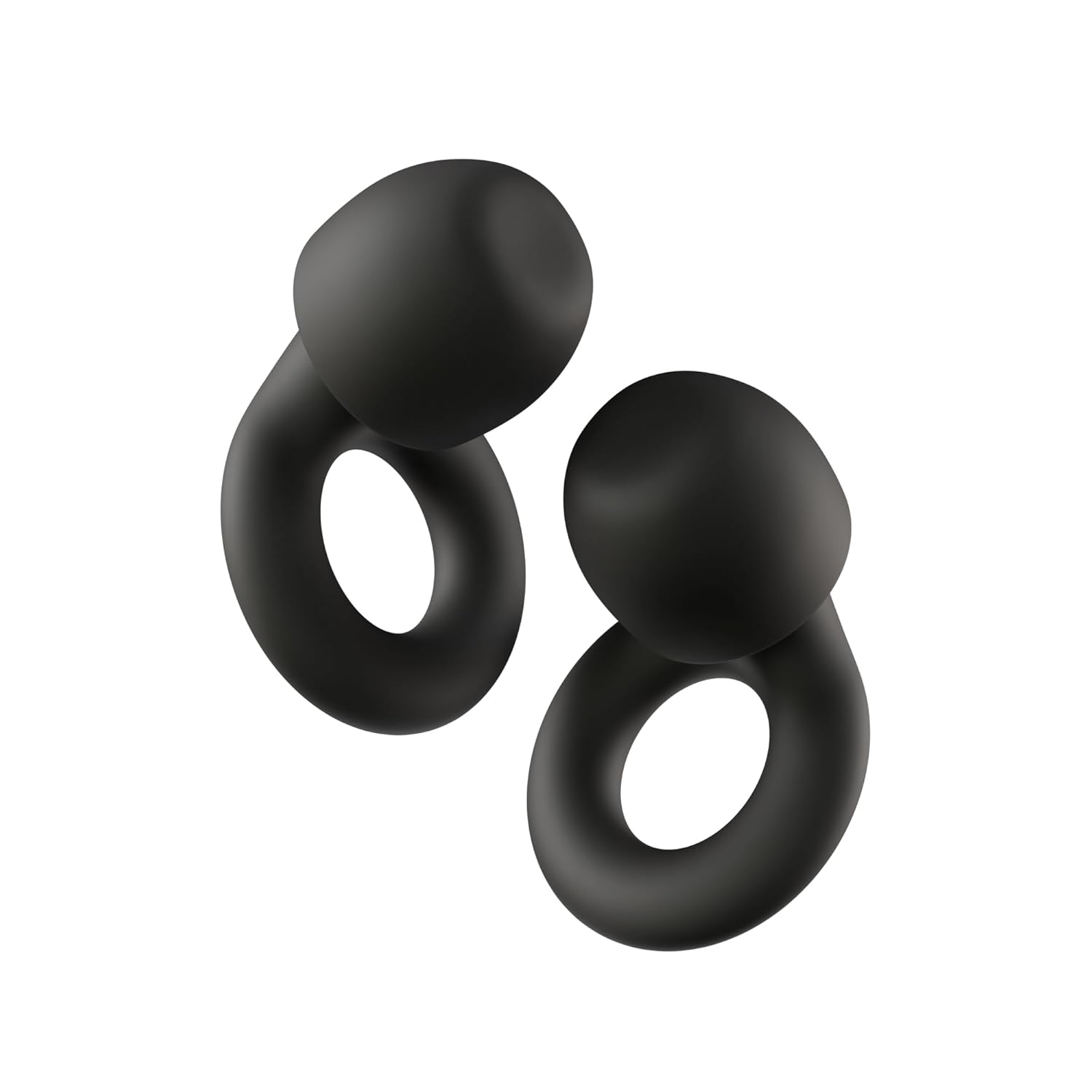
The Loop Quiet 2 Reusable Earplugs are on our deals list at Rs 1,799, down from Rs 2,399 on Amazon.in at the time of writing. They are soft silicone, rated around 24 dB SNR, and come with four ear-tip sizes plus a small carry case.
The reason they suit sleep specifically is the low profile. They sit close to the ear rather than protruding, which is the difference between usable and unusable if you sleep on your side. Reviews are broadly positive on noise reduction and sleep quality, with the honest and repeated caveat that comfort over a full eight hours varies from person to person. Fit is individual in a way that no review can settle for you.
Common questions
Will earplugs completely block out snoring?
No. They reduce it, often enough to fall asleep and stay asleep. Snoring has a strong low-frequency component, which is the part plugs handle least well.
Is it safe to wear earplugs every night?
For most people, yes, provided they are cleaned regularly and are not pushed deep into the canal. If you notice pain, itching or reduced hearing, stop and see a doctor.
Do they cause wax build-up?
They can slow the ear's natural outward movement of wax. Cleaning the plugs and taking occasional nights off is usually enough. Never use cotton buds to compensate.
Will I still hear my alarm?
Almost certainly, at 24 dB attenuation. A phone alarm on a bedside table is loud, and plugs do not block low-frequency vibration if the phone is on a hard surface.
Disclosure: TechBelievers lists products from Amazon.in and other stores as an affiliate. If you buy through our links we may earn a commission, at no extra cost to you. Prices are checked periodically and change often on the store's own site.