Motion Sensor Lights: Where a Stick-On LED Bar Actually Helps
The wardrobe in most Indian flats sits in a corner of the bedroom with no light of its own. At six in the morning, with the ceiling light off because someone else is still asleep, you are running a hand down a rail of shirts trying to tell navy from black. The same problem repeats in the kitchen cabinet above the counter, on the stairs to the terrace, and in the two metres of hallway between the bedroom door and the bathroom.
Wiring a light into those spots means a switch, a point and an electrician. If you rent, that is not happening. If you own, it is still a Sunday you will never get back. That gap is what stick-on motion sensor light bars have filled, at prices between Rs 400 and Rs 1,200.
How a motion sensor light bar actually works
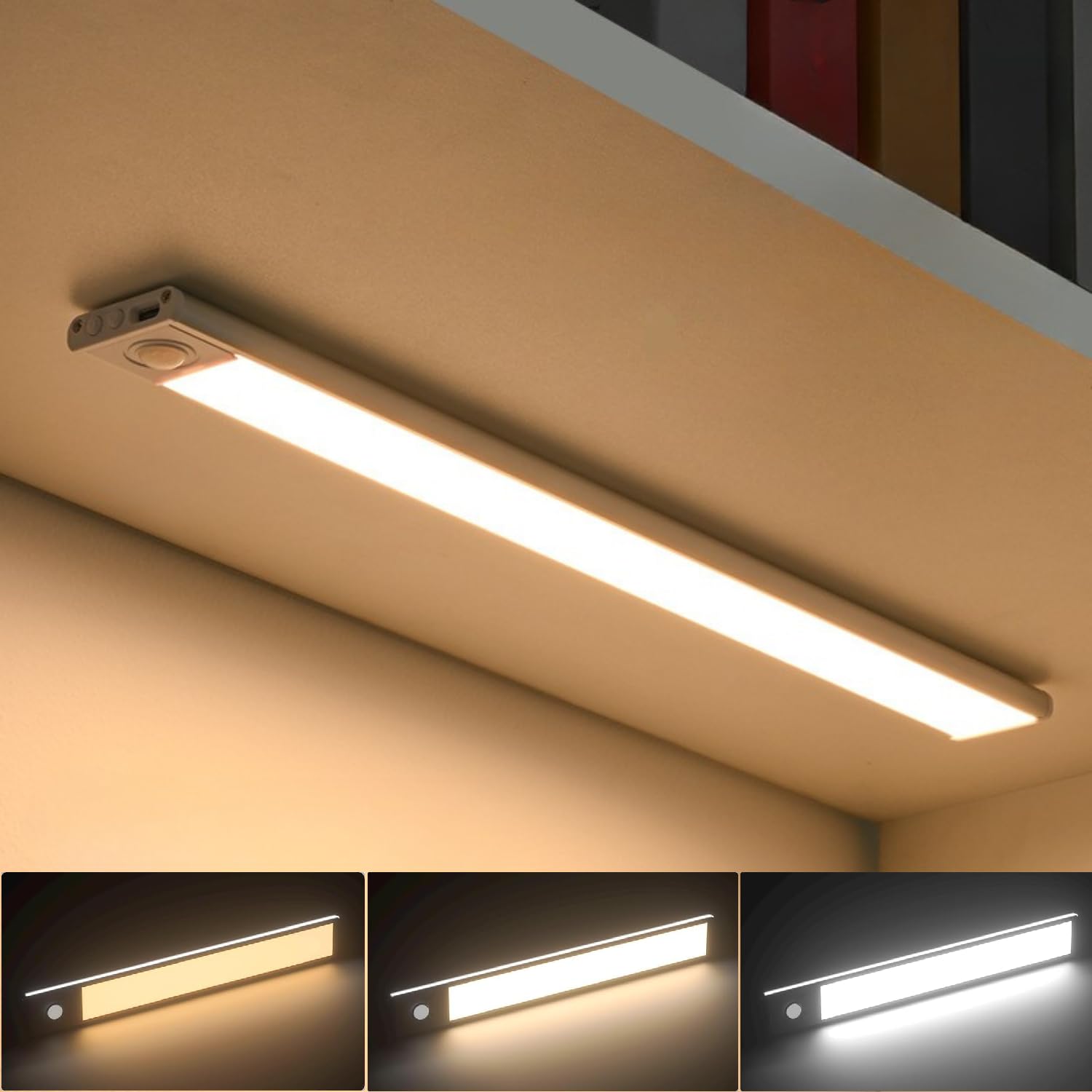
Almost every unit in this price band is the same three parts: a strip of LEDs, a lithium battery charged over USB, and a PIR sensor.
PIR stands for passive infrared. The sensor does not send anything out. It watches for a change in the pattern of infrared heat in front of it, which is what happens when a warm body moves across its view. That detail explains most of the behaviour people find confusing later. A PIR sensor is very good at spotting a person walking past it sideways, and noticeably worse at spotting someone walking straight towards it, because the heat pattern changes less. It also reacts to pets, and on a hot afternoon it can be slower because the difference between your body heat and the room is smaller.
Most bars also carry a small light sensor so they stay dark during the day. Once triggered, a timer holds the light on for a fixed period, usually fifteen to thirty seconds, and resets every time it sees motion again. Nothing here is clever. It is a torch with a trigger, and it works well precisely because it is simple.
The specs that matter, and why
Mounting method. This is the one that decides whether you keep the light or not. The better design is a magnetic back plate: you stick the plate to the wall with adhesive, and the bar itself snaps on and pulls off for charging. Bars with adhesive directly on the body force you to peel the whole thing off every few weeks, and the tape gives up quickly. Magnetic mounting also means you can lift the bar off and use it as a handheld light during a power cut.
Battery and how you charge it. Charging over USB-C is worth insisting on in 2026 so you are not hunting for a micro-USB cable. More important is how long a charge lasts in your particular spot. Runtime claims assume a handful of triggers a day. A bar in a wardrobe you open twice a day will run for weeks. The same bar in a hallway that four people walk through will need charging every ten days, and that is the point at which most people stop bothering.
Colour temperature. Warm white around 3000K is easier on the eyes if the light is anywhere near a bedroom, because it fires at night when your eyes are fully dark-adapted. Cool white around 6000K makes colours easier to judge, which matters inside a wardrobe. Neither is wrong. Just know which one you are buying, because photographs on listings are unreliable.
Sensor range and angle. Listings quote three to five metres. Treat that as a best case, measured straight across the sensor face in a cool room. In practice you get useful triggering at about half that, and the angle you mount at matters more than the number.
Where these genuinely help
Inside a wardrobe or a deep kitchen cabinet, this is close to the perfect product. The space is small, the sensor has an easy job because the door opening changes everything in front of it, and you use the light in short bursts so the battery lasts.
Stairwells and landings in independent houses are the second good case, particularly the last few steps where people misjudge the height.
The third is a hallway or bathroom approach at night. Getting there without switching on a ceiling light means you go back to sleep faster, and anyone in the house who wakes easily is not dragged awake with you.
Where they disappoint
They are not room lights. A bar of this size lights a metre or so of what is directly in front of it. If you are hoping to light a whole passage with one, you will be disappointed, and buying two is usually the answer rather than buying a bigger one.
The charging is a real chore and nobody mentions it in reviews written in the first week. Every rechargeable light in your house is one more thing on a charging list. If you already forget to charge things, a plug-in or battery-cell light will serve you better.
Adhesive fails on textured wall paint, on distemper, and on anything that has absorbed monsoon humidity. Tiles, laminate, metal and painted wood hold fine. On a rough wall, plan on a screw or accept that it will drop.
Pets will trigger it all night. So will a curtain moving in front of an open window. Both drain the battery, and neither is fixable.
Who should skip this entirely: anyone who has a switch within easy reach of the spot they are trying to light, anyone lighting an outdoor area exposed to rain, and anyone who wants light that stays on while they work. For that last case, a plug-in strip or a clip-on lamp is the correct product, not a motion sensor.
Mounting and charging without regretting it
Clean the surface with isopropyl alcohol or at least a dry cloth and let it dry fully before the adhesive goes on. Press for thirty seconds and then leave it alone for a few hours before hanging the bar on it. Most adhesive failures are impatience, not bad tape.
Aim the sensor across the path people walk, not along it. A bar on the side wall of a corridor triggers far more reliably than one on the end wall facing you.
The one we have listed
We currently list the KEYORA Rechargeable Motion Sensor Light Bar at Rs 799 on Amazon.in, rated 4.2 stars across 300+ ratings. It mounts magnetically, which is the detail we care about most, and it recharges rather than eating cells. It suits a wardrobe, a cabinet or a short hallway run. It will not light a room, and if your walls are rough you should plan for that before you order.
If what you actually want is light for reading in bed without disturbing anyone, a clip-on reading light at Rs 329 is the better answer. And if your real problem is the light going out entirely, an inverter LED bulb with battery backup solves a different and larger problem for about the same money.
Common questions
How long does one charge last?
It depends almost entirely on how many times a day it triggers. Two or three triggers a day in a wardrobe can stretch to a month. Twenty triggers a day in a hallway brings that down to a week or two.
Will it come on during the day?
Most units have a light sensor that keeps them off in daylight. In a dark wardrobe or a windowless cabinet they will fire regardless of the time, which is what you want there.
Can I use it outdoors?
Not unless the listing specifically states an IP rating. Indoor bars are not sealed, and one monsoon season on a balcony will finish the battery contacts.
Why does it sometimes not switch on when I walk up to it?
PIR sensors detect movement across their view better than movement towards them. Walking straight at the bar gives it the least to work with. Mounting it side-on to the path fixes this more often than not.
Disclosure: TechBelievers lists products from Amazon.in and other stores as an affiliate. If you buy through our links we may earn a commission, at no extra cost to you. Prices are checked periodically and change often on the store's own site.