Manual Vegetable Choppers: What They Save and What They Do Not
It is 8:40 on a Tuesday. Two onions still need dicing, the oil is already hot, and you are standing at the counter with streaming eyes trying to cut evenly with a knife that stopped being sharp sometime last year. Dinner is now fifteen minutes further away than you planned. This is the exact situation a manual vegetable chopper is built for, and it is worth being clear about that, because it is also the only situation where it clearly wins.
These are the small plastic bowls with a pull cord on the lid and a set of blades inside. Tug the cord a few times, the blades spin, and whatever was in the bowl comes out chopped. No motor, no power point, no charging. In a country where the kitchen point is often already shared between a mixer and a kettle, and where power cuts still happen, that simplicity is part of the appeal.
How the pull-cord mechanism actually works
Inside the lid is a spool wound with cord and connected to a central shaft. Pulling the cord spins the shaft, the shaft turns a stack of blades, and a spring rewinds the cord so you can pull again. Each pull gives roughly two to four seconds of spin. That is the whole machine.
Because there is no motor holding a constant speed, the chop is uneven by nature. Pull twice and you get a coarse dice. Pull eight times and you get something close to a paste. There is no dial and no setting. You learn the count for the things you cook and it becomes muscle memory within a week.
The other consequence of a spinning blade in a round bowl is that food gets flung outward. The pieces near the edge get cut less than the ones in the middle. Anyone who says the results are perfectly uniform has not used one.
The details that matter when choosing one
Where it genuinely earns its place
Onions, above all. Dicing onions is the single most repetitive job in most Indian kitchens and the one that produces the tears. A chopper turns four minutes of knife work into about twenty seconds, and the lid keeps the sulphur compounds contained so your eyes stay dry.
It is also good with garlic and ginger in small batches, with tomatoes if they are firm, with capsicum and cabbage for quick stir-fries, and with dry fruit for garnishes and sweets. Nuts chop cleanly because they are hard and dry, which is exactly what the blades want.
For anyone cooking in a rented flat with a tiny kitchen, the appeal is partly about space. It stacks, it stores anywhere, and it does not need a dedicated point next to the mixer.
Where it disappoints
Anything watery turns to slush. Ripe tomatoes, boiled potatoes and cucumber come out as a wet mess rather than pieces. Leafy greens wrap around the shaft and stop the blades dead within two pulls.
Cleaning is the real complaint. The blade stack has to come out, and it comes out attached to a shaft with sharp edges pointing in several directions. You cannot casually scrub it. Turmeric stains the plastic bowl permanently within a few weeks, so if you cannot live with a yellowing bowl, this is not the tool for you. Most units are also not safe in a dishwasher, and hot water will warp the lid over time.
Durability is limited. At this price you are buying a mechanism that will probably last one to two years of regular use before the cord or spring gives up. That is fine at Rs 137 and less fine if you expected an heirloom.
Who should skip it: anyone who already has a good knife and enjoys using it will find the chopper slower once you count the washing. Anyone cooking for more than four or five people regularly will spend more time refilling the bowl than they save. And if you own a food processor with a chopping attachment, this adds nothing.
Keeping it usable
Rinse it immediately after use. Onion and garlic residue dries hard around the blade hub and then requires poking with a brush. Cut vegetables into rough two-centimetre chunks before they go in; whole onions bounce off the blades and jam the mechanism.
Do not fill past half. Do not force the cord if it feels stuck, because that is how the spring snaps. Dry the blade assembly properly before storing, especially during monsoon, or you will find rust spots at the joints. Store the blade stack inside the bowl with the lid on rather than loose in a drawer, for the obvious reason.
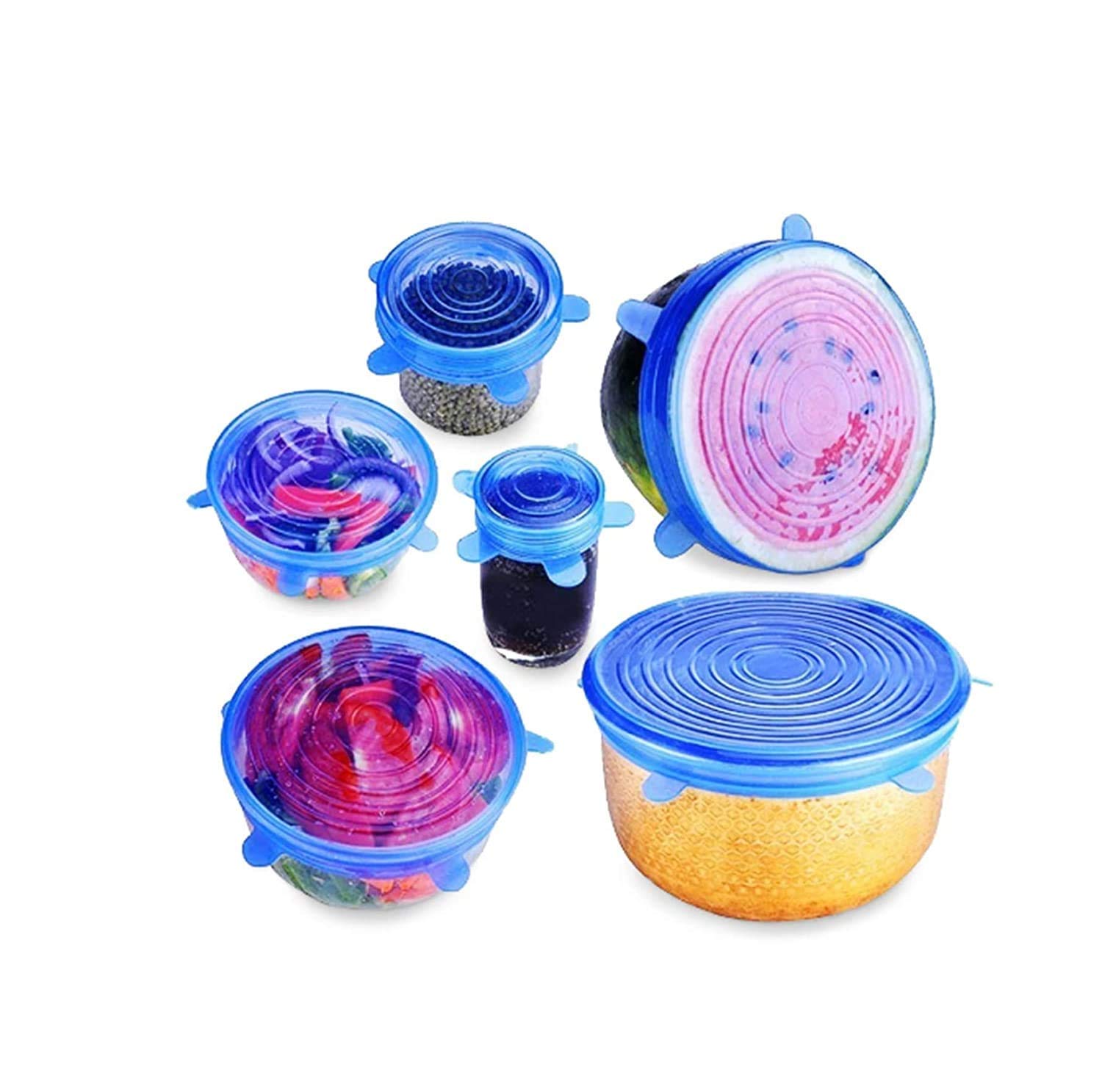
If you are chopping in bulk for the week, a set of reusable stretch lids makes it easier to store the prepped bowls in the fridge without hunting for matching containers.
The one we have listed
The Manual Vegetable Chopper with 5 Stainless Blades is listed at Rs 137 on Meesho with a 4.0 star rating from 74,000-plus ratings. It is a hand-pull cord design with five stainless steel blades and a bowl described as easy to clean.
That rating count is the interesting part. Seventy-four thousand people is a large enough sample that the 4.0 average is meaningful rather than noise, and a 4.0 rather than a 4.6 is roughly what an honest score looks like for this category: it works, it is cheap, and a share of buyers will find the cord gave out sooner than they hoped. At Rs 137 that is a straightforward trade rather than a hidden catch.
Common questions
Does it really stop the onion tears?
Mostly. The closed lid traps the compounds that irritate your eyes during the cutting itself. You will still get a whiff when you open the lid, but it is a fraction of standing over a chopping board.
Can I chop meat in it?
Not well. Raw meat is soft and fibrous, so it smears rather than cuts, and the plastic bowl is hard to sanitise properly afterwards. Use a knife or a proper mincer.
How many pulls do I need?
Two or three for a coarse onion dice, five or six for a fine one, and eight or more if you want something close to a paste. Start low and check, because you cannot un-chop.
Is it dishwasher safe?
Assume not unless the listing explicitly says so. Hot cycles warp thin lids and dull the blades faster than hand washing.
Also worth a look if you are reorganising the kitchen at the same time: a wall-mounted spice rack frees up the counter space this sits on.
Disclosure: TechBelievers lists products from Amazon.in and other stores as an affiliate. If you buy through our links we may earn a commission, at no extra cost to you. Prices are checked periodically and change often on the store's own site.