Magnetic mosquito door nets: what they keep out and what they do not
It is nine in the evening in May. The flat has finally dropped a degree below the corridor outside, and you would very much like to prop the front door open and let the cross-breeze do the work the fan has been failing at all day. You do not, because last time you tried that you spent the night listening to a thin whine circling your ear. So the door stays shut, the fan keeps grinding, and the AC runs two hours longer than it needed to.
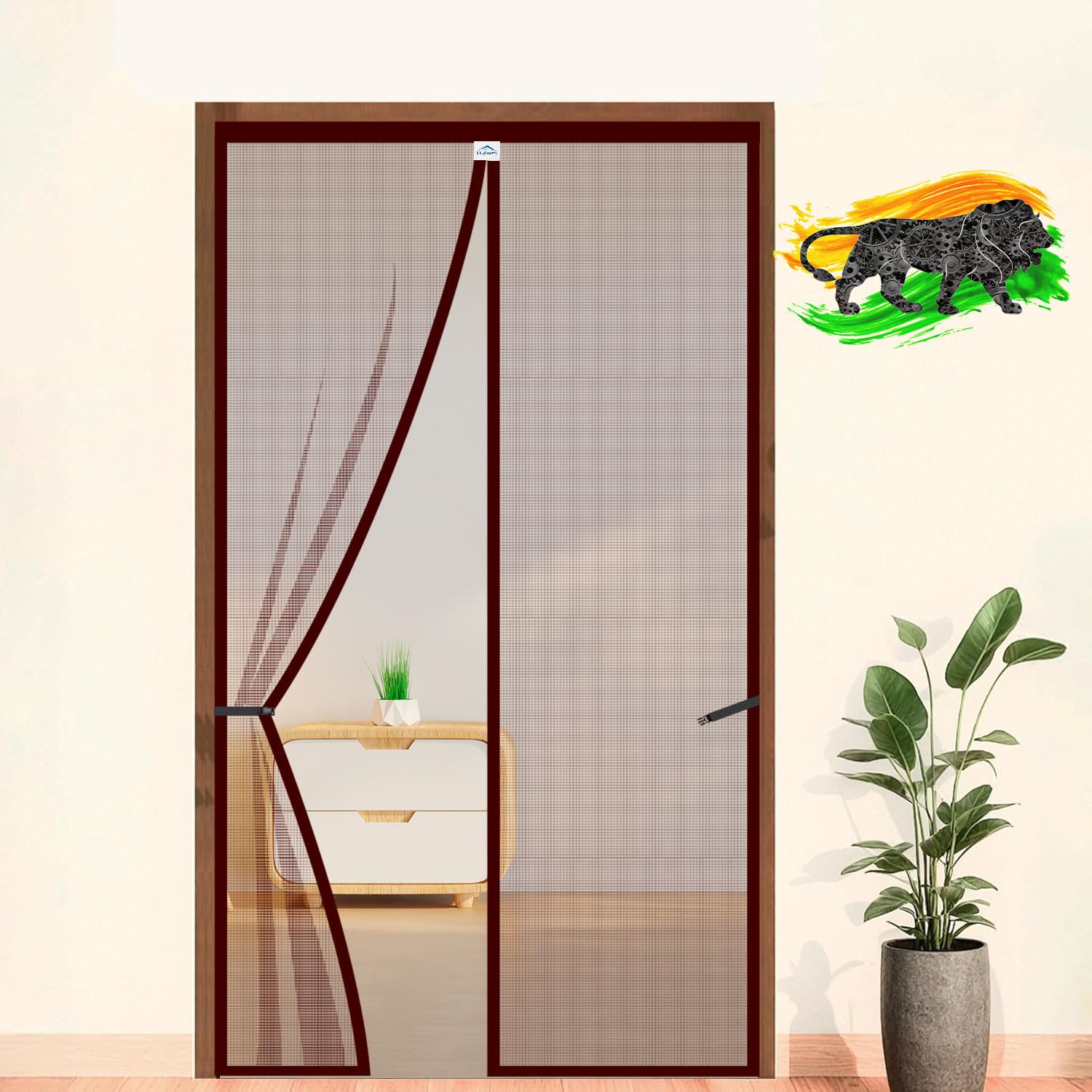
A magnetic door screen is the cheap answer to that exact problem. It is a fabric net that hangs in the doorway, parts when you walk into it, and pulls itself shut behind you on a line of magnets. No drilling, no aluminium frame, no carpenter, no landlord conversation.
How a magnetic door net actually works
The screen is two panels of fine polyester mesh. The top edge and both outer edges attach to the door frame with hook-and-loop tape: the stiff hooked half has an adhesive backing and goes on the frame, the soft half is stitched into the net itself. Down the middle seam sits a vertical row of small magnets, typically eight to eighteen of them depending on the height of the door.
Walk into the seam and the two panels swing apart around your shoulders. Walk through and the magnets find each other from the bottom up and zip the seam closed. There is no handle, no latch and nothing to remember, which is the entire design argument. A screen you have to close by hand is a screen that will be left open by the third person who uses it.
The physics that decides whether a net is good or useless is a balance between fabric weight and magnet strength. Mesh that is too light billows in the very breeze you bought it for. Mesh that is too heavy drags and the magnets cannot pull the seam closed at the bottom, which is precisely where mosquitoes come in. Reasonable nets solve this with a weighted hem at the bottom of each panel.
What to check before you buy
Where it genuinely helps
The obvious win is ventilation. Through most of the year in most Indian cities the outside air at night is cooler than the air trapped inside a concrete flat, and the only thing stopping you using it is insects. A door screen converts a shut door into an open one for under a thousand rupees.
It is also the right answer for a rented flat. Nothing is drilled, nothing is permanent, and the whole thing peels off and comes with you when you move. If you have wanted proper mesh doors but flinched at the quote from the fabricator, this is the version you can put up this evening.
Two smaller benefits people do not expect. Pets learn it in a day and push through on their own, which means you stop being the door for the cat. And during the monsoon, when you want the doors open for airflow but the balcony is suddenly full of flying insects around every light, it earns its keep in a single week.
Where it disappoints
The adhesive tape is the weak point of the entire category, and no brand has really solved it. Humidity, heat and dust all attack it. If your frame is uPVC, powder-coated metal or any slightly textured surface, expect the top corners to peel and plan on either push pins or a stronger double-sided tape from a hardware shop.
Fine polyester mesh cuts the light and the view. It is not much, but on a doorway that was your main source of daylight you will notice the room feels dimmer. It also cuts airflow somewhat: a screen is not the same as an open door, it is roughly an open door with a slight resistance to it.
Heavy traffic wears it out. A screen on a doorway used forty times a day will show fraying at the seam within a year. On a balcony door used a few times an evening it will last a lot longer.
Who should skip this. If you already have proper fixed mesh doors, this adds nothing. If your door frame is a shape these nets do not fit — a very wide double door, a sliding glass door, an odd arch — buy a fitted mesh instead of fighting the geometry. If your building has a real mosquito problem from stagnant water nearby, a door screen only fixes one route in; you still need to deal with windows, drains and standing water. And if anyone in the house has trouble with mobility or balance, walking into a fabric curtain is one more thing to manage.
Fitting and upkeep
Clean the frame with a dry cloth and then with spirit or a little surgical spirit before applying the tape, and let it dry completely. Adhesive fails on dust more often than it fails on its own. Press the tape down hard for a good thirty seconds along the whole run, then leave it a few hours before hanging the net.
Hang the top first, then work down each side, keeping the panels under slight tension so they do not sag. Check that the two bottom corners meet cleanly when the seam closes — this is the gap that matters and it is easy to miss.
The net itself washes. Take it down, hand wash in mild soap, and hang it to dry rather than wringing it. Do this once a season and it stays a screen rather than a dust filter.
On the health side: a door screen reduces the number of mosquitoes that get in. It is not a mosquito control programme, and this is general information rather than medical advice. If dengue, malaria or chikungunya is a live concern where you live, follow local public health guidance and speak to a doctor about anything symptom-related.
The one we have listed
We currently list the LifeKrafts Magnetic Auto-Closing Mosquito Door Net at Rs 898 on Amazon.in. It is a polyester screen that attaches to the frame with hook-and-loop tape and closes on magnets down the centre seam, with no drilling required. It carries a 4.4 star rating across more than 20,000 ratings, which for this category is an unusually large sample to judge from.
Measure your frame before you order. That is the single thing that decides whether this works or sits in a cupboard.
If you are sealing a doorway anyway, the other gap worth closing is the one underneath it. We also list a DEAGAN door bottom draft guard for that, and a set of anti-vibration pads if the other thing keeping you awake is the washing machine.
Common questions
Will it stay shut in strong wind?
Partly. In a steady breeze the magnets hold and the panels ripple. In a gust through a wind tunnel of a corridor, a light net can blow open at the bottom. A weighted hem is what makes the difference here.
Can I still use the door normally?
Yes. The net hangs inside the frame, so the door itself opens and shuts behind it. Most people leave the net up through the warm months and take it down when they stop opening the door.
Do pets and small children get through it?
Pets work it out within a day or two and push through on their own. Small children push through it easily, which is worth knowing if the door opens onto a balcony or a stairwell — a screen is not a barrier.
What if the adhesive tape stops sticking?
It is a common failure and an easy one. Replace it with strong double-sided tape from a hardware shop, or use the push pins included in most kits if the frame is wood. Clean the surface properly first either way.
Disclosure: TechBelievers lists products from Amazon.in and other stores as an affiliate. If you buy through our links we may earn a commission, at no extra cost to you. Prices are checked periodically and change often on the store's own site.