Inverter LED bulbs: what they cover during a power cut and what they do not
It is a quarter past nine. The fan slows, the fridge clicks off, and the room goes black mid-sentence. Somebody finds a phone and props it torch-up against a glass so the ceiling throws back a weak circle of light. The homework stops. Whoever is in the kitchen stands still rather than reach for anything sharp.
Ten or forty minutes later it comes back. Most Indian households have a routine for this. Very few have done the one cheap thing that removes the scrambling at the start of it.
How an inverter bulb works
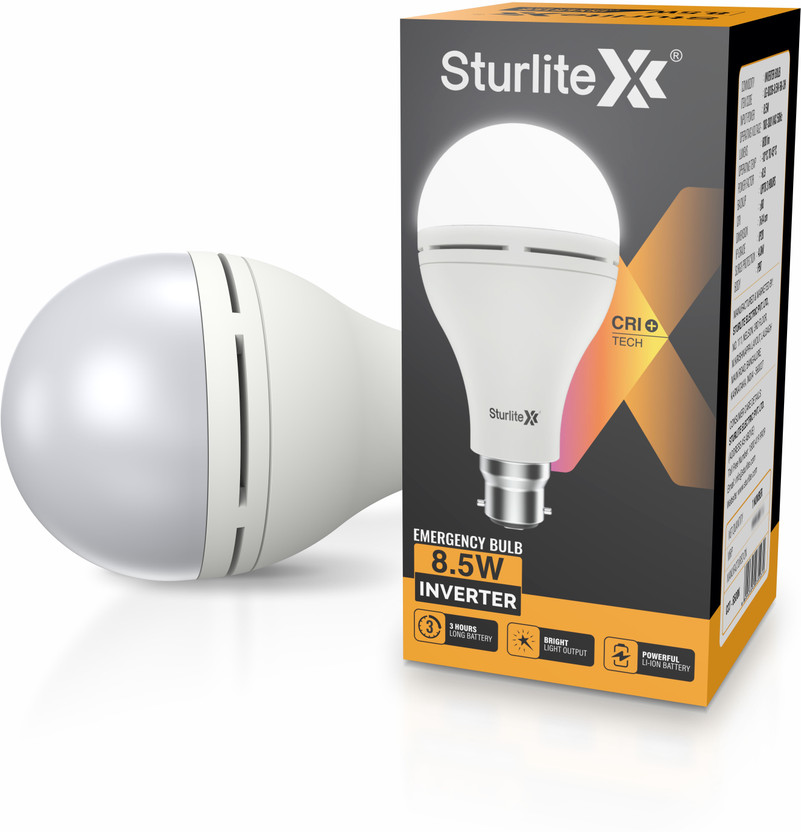
Inside the familiar bulb-shaped envelope there are three things instead of one: the LEDs, a small rechargeable cell, and a circuit that decides which source is in use. With the mains on, the bulb lights from the mains and trickle charges the cell. When the supply drops, it switches over within a fraction of a second and keeps glowing off the battery, usually at reduced brightness.
One condition catches almost everybody, so it belongs here rather than buried lower down. The wall switch has to be left on. That switch is how the bulb knows you want light. If it was off when the power went, the bulb stays dark, exactly as a normal bulb would. This one fact accounts for a large share of the angry reviews on every inverter bulb ever sold.
The numbers that decide whether it is any good
Also worth knowing: an inverter bulb is generally dimmer than a plain LED of the same wattage, because space and power go to the battery and charging circuit. Do not expect a 9 watt inverter bulb to match a 9 watt LED for output.
Where they genuinely help
Frequent short cuts are the best case. If your supply drops for fifteen or twenty minutes several times a week, from feeder trips, evening load shedding or a monsoon fault on the line, a bulb that simply carries on is worth more than its price.
The right place for one is the room where darkness is a problem rather than an inconvenience. A kitchen with a gas flame and a knife in it. A staircase with a step somebody could miss. A bathroom. A child studying with an exam in three weeks.
Homes without an inverter are the obvious audience, but so are homes with one. Plenty of household inverters run the fans and one or two points, leaving the kitchen or stairwell on the dead circuit. A bulb fills that gap for the price of a bulb rather than the price of rewiring.
Renting makes the case stronger again. It screws into an existing holder, needs no wiring, no landlord conversation, and it comes with you when you move.
Where they disappoint
The headline is that this is not an inverter. It runs a light. It does not run a fan, a router, a fridge or a laptop charger. During a May cut, a lit room with no moving air is still a room you want to leave. If what you need is a fan at night, a bulb does not answer that.
The battery ages, and this is the part nobody plans for. A cell giving close to three hours when new gives noticeably less after eighteen months and may give under an hour by the end of year two. Then you replace the whole bulb, because the cell is sealed in.
The switch problem is real in practice, not just theory. The rooms where you most want backup light, a stairwell or a bathroom, are exactly the rooms where the switch is normally off. You either leave a light burning all evening or accept that the bulb helps only when the cut catches you in that room.
They also do not play well with dimmers, and they do nothing behind a smart switch or relay that cuts power at the fitting, since from the bulb point of view that is identical to being switched off.
Who should skip this. Anyone with a working household inverter that already covers their lighting circuits, where this is simply redundant. Anyone whose supply is reliable, where the bulb will sit charging for years and die of old age unused. Anyone whose real complaint is heat rather than darkness, because a bulb will not help. And anyone who wants a bright, colour-accurate light to read or work by during a cut, who is better served by a decent plain LED plus a separate rechargeable lamp.
Getting the best out of one
Fit it where the light matters most, not in the drawing room where a candle would do. The kitchen, the stairs, the corridor, the bathroom.
Prefer a fitting whose switch is habitually left on, or accept that you must change a habit for the bulb to be any use.
Let it charge fully before you rely on it. Straight out of the box it may hold very little.
Avoid closed or sealed fittings. Heat kills lithium cells, and an enclosed glass shade in a Chennai summer is the worst place for one. An open holder is better.
Keep an ordinary LED elsewhere in the room, so you can tell a bulb fault from a supply fault without guessing.
Budget for replacement every couple of years and it stops feeling like a disappointment. At current prices that is not a painful cycle.
The one we have listed
We currently list the Sturlite 8.5W Inverter LED Bulb with 3-Hour Battery Backup at Rs 179, down from Rs 649, on Flipkart. It screws into any normal B22 holder, charges itself while the mains are on, and keeps glowing for about three hours when the supply drops. The rating is 3.9 stars across 3,419 ratings.
Worth reading that score properly. 3,419 ratings is a large sample, so 3.9 is a real number rather than noise, and it is about where the whole category sits: a product that does one job adequately and gets marked down for the jobs people hoped it would do. At Rs 179 it costs roughly what a plain LED costs, which is the argument for putting one in the kitchen and seeing how you get on.
For the places a bulb cannot reach, two other things we list are worth a look: a KEYORA rechargeable motion sensor light bar for cupboards and passages with no fitting at all, and a rechargeable clip-on book reading light for the reading that an inverter bulb is too dim to support.
Common questions
Does it work if the switch is off?
No. The wall switch must be on when the power goes for the bulb to light on battery. This is by design and is the most common source of complaints.
Can it run a fan or charge a phone?
No. The battery inside is sized to run its own LEDs for a few hours and nothing else. There is no output socket.
How many years will it last?
The LEDs will outlive the cell. Expect useful backup for around two years of regular cycling, less in a hot enclosed fitting, after which you replace the bulb.
Do I still need a proper inverter?
If you want fans, a router or a fridge during a cut, yes. An inverter bulb is a cheap partial answer for light only, not a replacement for a home backup system.
Disclosure: TechBelievers lists products from Amazon.in and other stores as an affiliate. If you buy through our links we may earn a commission, at no extra cost to you. Prices are checked periodically and change often on the store's own site.