Handheld Vacuums: Where They Genuinely Help and Where They Waste Your Money
The handheld vacuum is one of those products people either love or quietly resent. The split almost always comes down to what they expected it to do.
Bought as a car cleaner, a crumb catcher, a keyboard and sofa tool, it is one of the better small purchases you can make. Bought as a replacement for a proper vacuum cleaner, it is a Rs 3,000 disappointment sitting in a cupboard.
What the numbers on the box mean
Kilopascals, and why the big number is misleading
Listings shout about suction in kPa. Numbers between 6 and 20 kPa are common in this category. The figure is measured at the motor with the airway sealed, which is not how a vacuum is ever used. A unit with 15 kPa and a badly designed nozzle can pick up less than one with 10 kPa and a good one.
What actually determines pickup is the combination of suction and airflow through the head. Since almost nobody publishes airflow, the practical approach is to ignore the headline number and read reviews for the specific things you care about: pet hair, sand from the beach, biscuit crumbs pressed into a car seat.
Battery and runtime
Most handhelds run 12 to 30 minutes. That sounds short and is usually enough, because handheld cleaning is a burst activity. What matters more is whether suction stays constant or fades as the battery drops. Cheaper units fade noticeably in the last third.
Charging over USB-C is now standard and worth insisting on. Proprietary chargers are a needless annoyance.
Filters
This is the maintenance cost nobody mentions at the point of sale. Washable HEPA-style filters are normal in this class. They need rinsing and, importantly, drying fully before reuse, which takes hours. If you use the vacuum often, buy a second filter so you are never waiting. A clogged filter is the single most common reason people think their vacuum has lost power.
Wet and dry
Some units advertise wet pickup. Treat this as a small-spill feature, useful for a splash of juice on the car mat, not for anything substantial. Wet debris also means cleaning the bin properly afterwards or it will smell within a week.
Where a handheld genuinely wins
Where it will let you down
The maintenance nobody tells you about
Three habits make the difference between a handheld that lasts three years and one that feels dead in six months.
Empty the bin after every use, not when it is full. A packed bin blocks airflow and makes the motor work harder. Rinse the filter roughly every fifth use and let it dry completely before it goes back in, because a damp filter both smells and restricts airflow. And check the nozzle for a blockage before assuming the suction has weakened, since a small piece of paper wedged in the intake mimics a failing motor perfectly.
The one we have listed
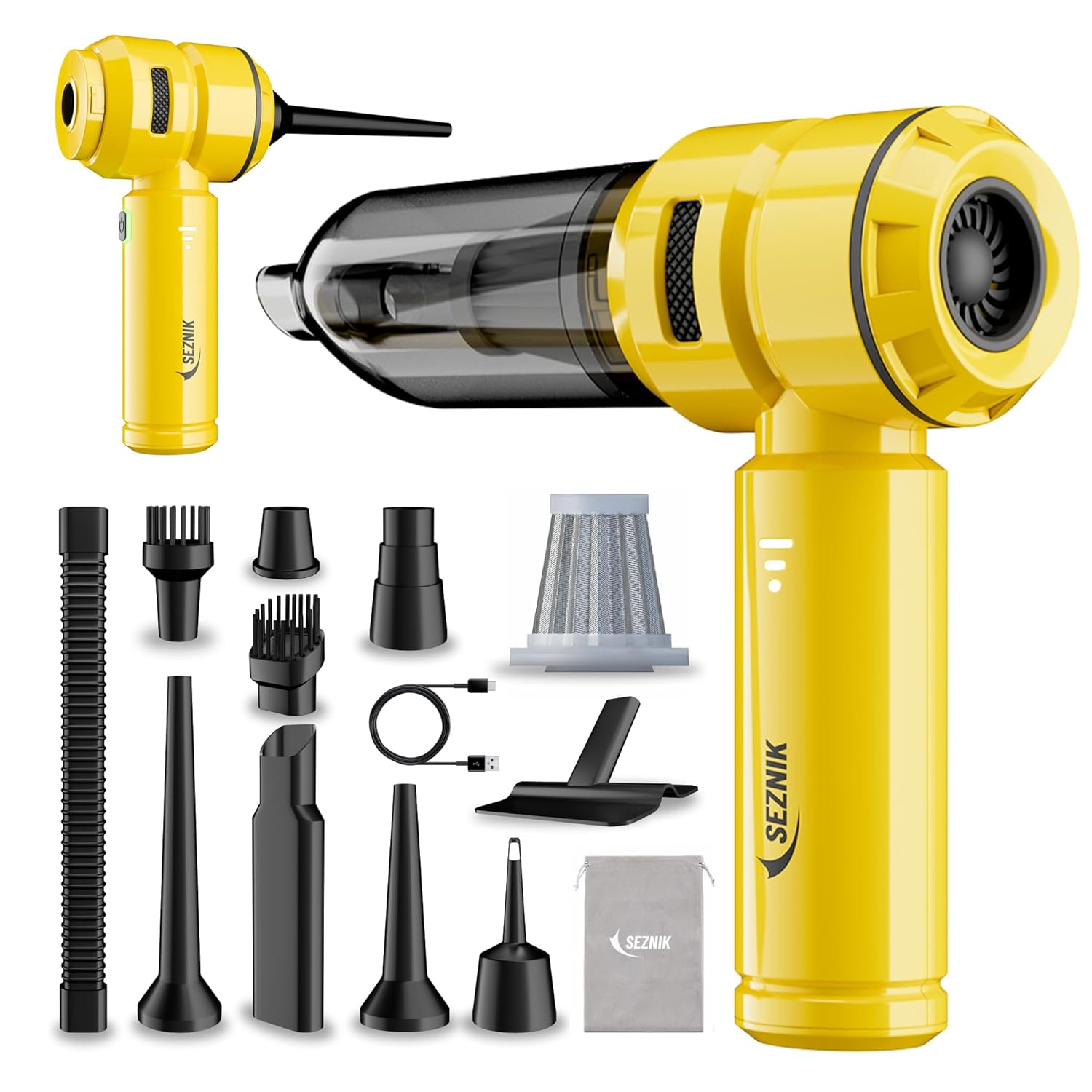
The SEZNIK 4-in-1 Cordless Handheld Vacuum is on our deals list at Rs 3,399 on Amazon.in, with a 4.4 star average across more than 2,000 ratings. The 4-in-1 refers to the swappable nozzles, which is the part that decides whether a handheld is useful. A crevice tool for seat gaps, a brush for dashboards and keyboards, and a wider head for flat surfaces cover most of what people actually reach for.
It is cordless, so it works in the parking area without an extension board, and it is small enough to live in a kitchen drawer or the boot. That is the real test for this category. A handheld vacuum stored in a cupboard on the top shelf is a handheld vacuum that gets used twice a year.
Common questions
Is a handheld enough if I have a small flat?
Probably not on its own. For a 1BHK with tiled floors you can get by with a handheld plus a broom, but the moment there is a carpet or a rug you will want a full-size or stick vacuum.
How much suction do I need for car cleaning?
Anything in the 8 kPa and above range handles normal dust, crumbs and sand. Ground-in pet hair on fabric seats is the hard case, and for that the nozzle design matters more than the kPa figure.
Cordless or a 12V car vacuum?
If it is only ever used for the car, a 12V corded unit is cheaper and never runs out of charge. If you also want it for the kitchen and desk, cordless is worth the extra.
Do the filters need replacing?
Washable filters last a long time but not forever. Expect to replace one after a year or two of regular use. Check that spares are actually available for the model before buying.
Disclosure: TechBelievers lists products from Amazon.in and other stores as an affiliate. If you buy through our links we may earn a commission, at no extra cost to you. Prices are checked periodically and change often on the store's own site.