Gas Leak Detectors for Indian Kitchens: An Honest Guide
The knob nobody remembers turning
You cook dinner, wipe the platform, switch off the lights and go to bed. Somewhere in that sequence the regulator knob got nudged a quarter turn instead of a full turn. Nothing smells wrong yet because the kitchen door is shut and the exhaust fan ran for twenty minutes after. By 2am there is enough LPG pooled near the floor to matter, and every person in the house is asleep with their nose switched off.
That is the entire argument for a gas leak detector. Indian kitchens run almost exclusively on smell as the safety system, and smell only works when somebody conscious is standing nearby. A plug-in alarm is the cheap way to cover the hours when nobody is.
How a gas detector actually knows
The sensor inside these units is a small heated element that reacts to combustible gas in the air. As gas concentration rises, the electrical resistance across the element changes, and the circuit converts that change into a reading. Most household detectors report it as a percentage of the Lower Explosive Limit, which is the concentration at which the air-gas mixture becomes capable of igniting.
The important thing to understand is that these alarms are tuned to fire well below anything dangerous. A typical trigger point sits somewhere around 10 to 25 percent of the explosive limit. In practical terms, the alarm goes off long before the room is anywhere near a flashpoint, which is exactly what you want. It also means the occasional false alarm is a feature of the design, not a defect.
The mercaptan that gives cooking gas its rotten-egg smell is added deliberately, precisely because LPG itself is odourless. A detector does not care about the smell at all. It reacts to the gas. That difference matters when a leak happens slowly and the household simply adapts to a faint background smell over weeks.
The specs that matter and the ones that do not
Which gases it covers. An Indian home may run on cylinder LPG, piped natural gas, or both across different flats. A detector that lists LPG, PNG, methane, propane and butane covers you regardless of which supply your building switches to. Buying a single-gas unit and then moving to a PNG flat is a wasted purchase.
Alarm volume. Anything under about 80dB is a suggestion, not an alarm. The point of the device is to wake somebody through a closed bedroom door two rooms away. 85dB is the sensible floor.
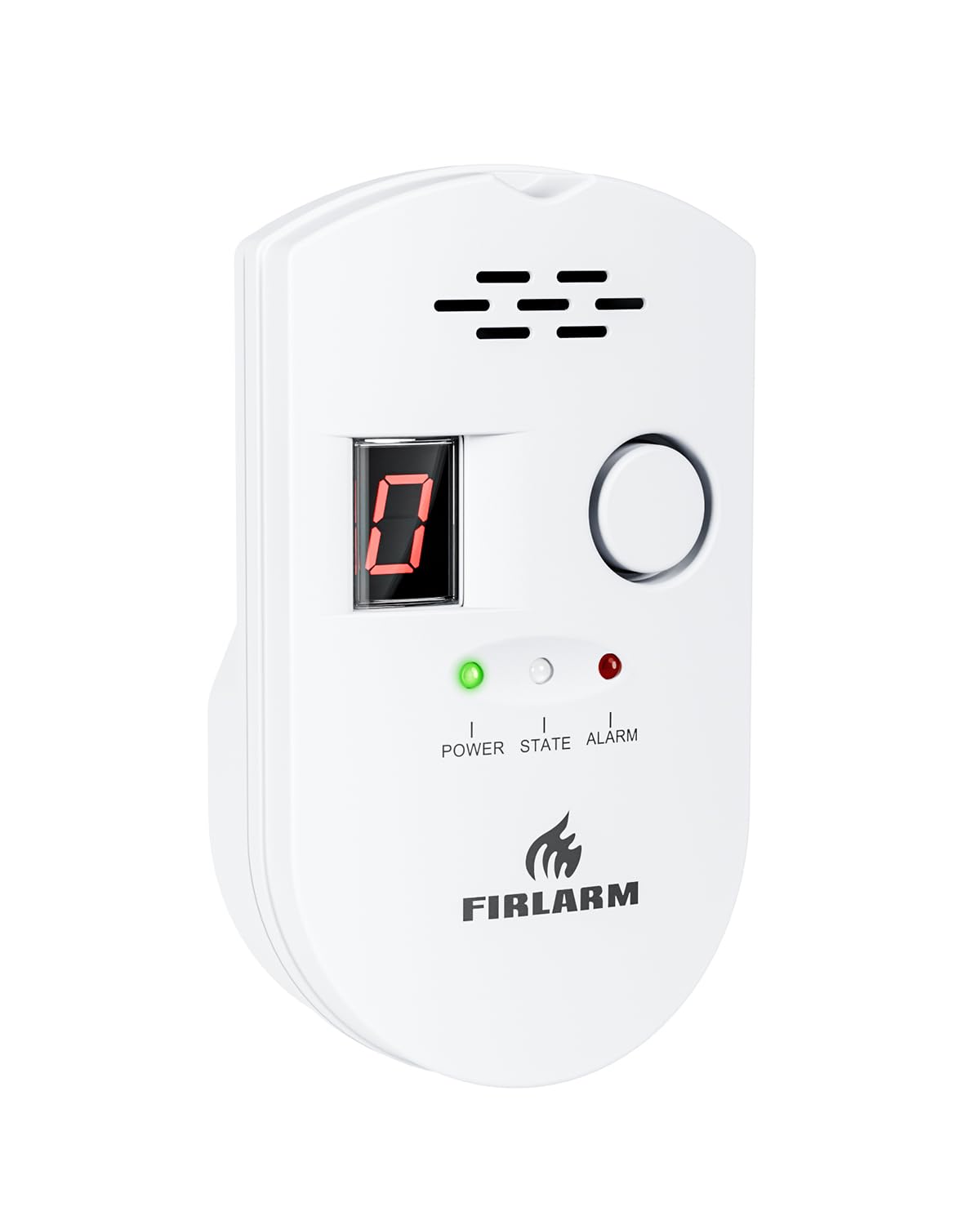
A live display. Units with a digital concentration readout are worth the small premium. A number that sits at zero every day and reads 3 one morning tells you something is drifting before the alarm ever sounds. A bare red LED tells you nothing until it is already an emergency.
Sensor life. These sensors degrade. Most are rated for roughly five years of continuous operation, after which the unit needs replacing rather than servicing. Nobody advertises this loudly. Treat a gas detector as a consumable with a long life, not a permanent fixture.
Things that matter less than the marketing suggests: app connectivity, phone notifications, and battery backup. A gas alarm that only screams into your phone is worse than one that screams into the room, because the person in the room is the one who needs to open a window.
Where you put it decides whether it works
This is the part people get wrong. LPG is heavier than air, so it sinks and pools near the floor. A detector mounted at eye level near the ceiling will catch a natural gas leak, because PNG is lighter than air and rises, but it will be nearly useless for a cylinder leak.
For LPG, mount the unit low, roughly 30cm above the floor, and within a couple of metres of the cylinder and regulator. For PNG, mount it high. If your building has both, or you are not certain, the cylinder position is the one to prioritise, since that is where the vast majority of Indian household leaks originate.
Keep it away from the burner itself, from the exhaust fan, and from directly above the stove. Cooking fumes, steam from a pressure cooker and oil aerosol all shorten sensor life and cause nuisance alarms. A metre of separation from the cooking zone is plenty.
Where these detectors disappoint
They are noisy in the wrong way sometimes. Aerosol deodorant, spirit-based cleaning fluid, fresh paint and even a lit incense stick nearby can push the reading up. If you install one in a small closed kitchen and then spray something, expect a shriek. Most people learn the triggers within a fortnight, but the first week can be irritating.
They also need mains power, permanently. A plug-in unit occupies a socket in a room that usually has too few of them, and in a house with frequent power cuts the detector is offline exactly when the inverter is running and everyone is cooking by torchlight. If your area has long daily cuts, this is a genuine limitation and worth thinking about before you buy.
And they do nothing about carbon monoxide. LPG detectors and CO detectors use different sensors and are not interchangeable. If your concern is a poorly ventilated gas geyser rather than a cylinder leak, you need a CO alarm, which is a separate product entirely.
Living with one
Test it monthly. Most units have a test button that verifies the alarm circuit, though not the sensor itself. To check the sensor, hold an unlit gas lighter near it and press the trigger briefly without igniting. It should react within seconds.
Wipe the vents with a dry cloth every few months. Kitchen grease films over the sensor mesh and blunts response time more than anything else. Do not use cleaning spray on it, for reasons that should now be obvious.
Write the installation date on the back in marker. Five years is easy to lose track of, and a dead sensor looks exactly like a healthy one.
If the alarm ever does go off for real: do not touch any electrical switch, including the light switch and the detector itself. Open windows and doors, turn the regulator off, and get everyone out. Switching something on or off can spark.
The one we have listed
We have the Firlarm Plug-In LPG and Gas Leak Detector Alarm listed at Rs 3,979 on Amazon.in, rated 4.5 stars across 2,700+ ratings. It covers LPG, PNG, methane, propane and butane, shows live gas concentration on a digital display, and sounds an 85dB alarm when levels cross the safety threshold.
Rs 4,000 is not nothing for a device you hope never activates, and there are cheaper detectors on the same listings page. What the rating volume buys you here is confidence that the sensor is not decorative, which is a real risk at the bottom of this category. Buyers repeatedly report it catching a half-open regulator knob before anything came of it.
If you are the sort of household where the cylinder is turned off at the regulator every single night without fail, and someone is always home, you can reasonably skip this. It earns its place in homes with elderly parents, small children, live-in help, or anyone who travels and leaves the kitchen unattended for days.
Related, if you are covering household risks generally: an overflow alarm for the water tank solves a much less dangerous but far more frequent annoyance, and a plug-in energy meter is useful if you want to know which appliance is quietly eating your bill.
Common questions
Will it work during a power cut?
No. A plug-in mains detector is dead when the socket is dead. Some models offer battery backup; this one is mains-powered, so budget for that gap if your area has long cuts.
How high should I mount it for a cylinder kitchen?
Low. LPG sinks, so roughly 30cm off the floor and within about two metres of the regulator. Ceiling mounting is for piped natural gas, which rises.
Does it detect carbon monoxide too?
No. Combustible gas sensors and CO sensors are different technologies. If you want CO coverage, buy a dedicated CO alarm as well.
How long does the sensor last?
Household gas sensors are generally rated around five years of continuous use. After that the unit should be replaced rather than repaired.
Disclosure: TechBelievers lists products from Amazon.in and other stores as an affiliate. If you buy through our links we may earn a commission, at no extra cost to you. Prices are checked periodically and change often on the store's own site.