Fabric Shavers: What a Lint Remover Rescues and What It Wrecks
You pull out the same navy sweatshirt you have worn every winter for four years, and it looks tired. Not stained, not torn, not faded much. Just fuzzy. Little grey balls all over the sleeves and across the chest, and a general lack of crispness that makes it look like something you sleep in rather than something you wear out. Most people quietly stop wearing that garment and buy a new one.
The fuzz has a name — pilling — and it comes off in about four minutes with a device that costs less than a pizza.
What pilling actually is
Fabric is made of fibres twisted into yarn. Friction — under the arms, at the cuffs, wherever a bag strap rubs — works short fibres loose. They do not fall off; they stay anchored at one end and tangle with their neighbours into a small ball. That ball is a pill. Once a few form, they catch on other fibres and the process speeds up.
Softer, shorter-fibre materials pill fastest. Cheap acrylic, fleece, cotton-poly blends, lambswool, and anything brushed for softness will bobble. Tightly spun long-fibre fabrics — good merino, denim, most shirting cotton — pill far less.
This matters because it tells you what a shaver can and cannot do. Shaving removes the pills. It does not stop new ones forming, because the underlying fibre length and weave has not changed. A garment that pilled once will pill again. You are managing a condition, not curing it.
How an electric shaver works
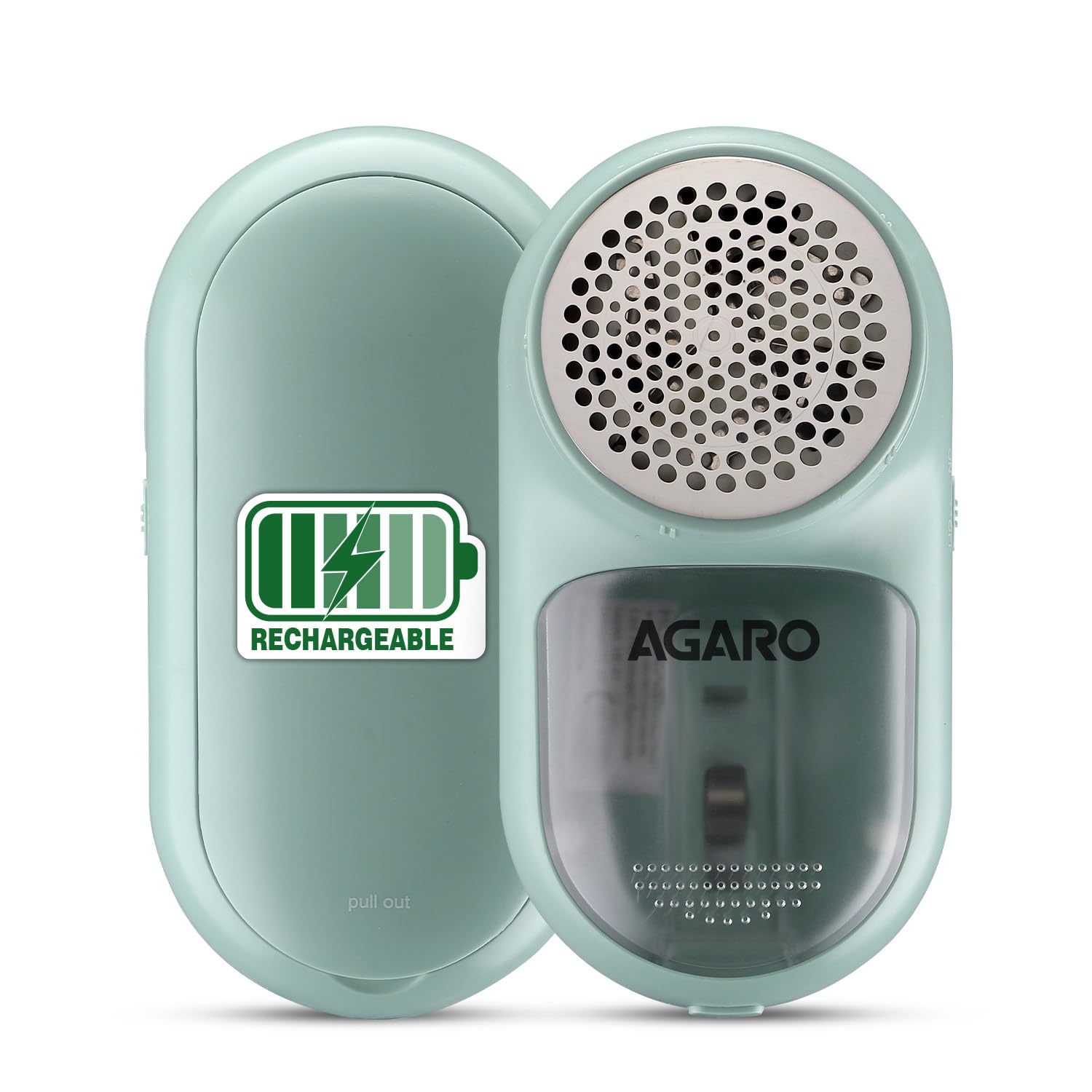
Under the mesh guard sits a small rotating blade, like a beard trimmer laid flat. The mesh holds the pills up so the blade can slice them off while keeping the blade a fixed distance from the fabric surface. Shaved fuzz collects in a chamber you empty out.
Three things separate a good one from a bad one:
Where it genuinely helps
Sweaters and sweatshirts are the obvious case, and the result is dramatic — a garment that looked ready for the donation pile looks two years younger.
Fleece blankets are the underrated one. The synthetic throws most Indian households own bobble badly after a few washes, and shaving one takes ten minutes and makes a visible difference across a large surface.
Upholstery is where the money is. A sofa in a rented flat that has gone fuzzy on the arms and seat cushions is expensive to reupholster and cheap to shave. Do a small hidden patch first.
Car seats, office chairs, and the fabric on a footrest or chair arm all fall into the same bucket: fabric that rubs against a body all day and looks worn before it is worn out.
Where it disappoints, and where it does damage
It will put a hole in loose knits. This is the real risk and it is not theoretical. On an open weave, the mesh lets a section of yarn through and the blade cuts the yarn itself, not a pill. On a knit, one cut yarn unravels. Chunky handknits, lace-effect tops, and anything you can see through should be done with scissors or a fabric comb, or not at all.
It cannot fix stretched, thinned or faded fabric. If the elbows have gone see-through, shaving makes it worse by removing what little surface fuzz was hiding the thinness.
The results are temporary. Expect to do a favourite sweater once or twice a season. People who imagine a one-time fix are mildly disappointed.
It is slow on large items. Shaving a double-bed blanket properly is a genuinely tedious forty minutes.
Blades dull. After heavy use the cut degrades into a drag, and a dragging blade pulls fabric. Replacement blades are cheap but you have to notice when the time has come.
Who should skip it: people whose wardrobe is mostly cotton shirts, denim and good merino, which barely pill at all. Also anyone whose instinct with a new gadget is to go fast and press hard — that is precisely how a sweater gets a hole.
How to use one without ruining anything
Lay the garment flat on a hard surface. Not on your lap, not on a bed. A soft surface lets the fabric bunch up into the mesh, and bunched fabric is what gets cut.
Pull the section you are working on taut with your free hand, and keep that hand well away from the head.
Move in slow, light circles. Let the weight of the device do the work. Pressing down closes the gap you carefully set and turns a shaver into a cutter.
Test on a hem, an inside seam or an under-arm panel before you go near the front of a garment.
Empty the chamber often. A full chamber reduces suction of loose fuzz into the head, and the shave gets patchy.
Do it before washing, not after. Loose cut fuzz then goes out with the wash rather than sticking to everything in your cupboard. In humid coastal weather this matters more, since damp fuzz clings.
The one we have listed
We have a rechargeable Electric Lint Remover and Fabric Shaver listed at Rs 799 on Amazon.in, rated 4.4 stars across 3.7K+ ratings. That is a solid sample size, which is worth more than a higher rating on fifty reviews.
It is rechargeable rather than battery-fed, which is the specification that matters most in this category for the torque reason above. The listing covers woollens, upholstery and cotton, which matches where these devices actually earn their keep.
At this price the calculation is simple: if it rescues one sweater and one blanket, it has paid for itself several times over. If your wardrobe does not pill, it will sit in a drawer.
If you are working through a general clean-up of a rented flat, it pairs sensibly with something like a cordless spin scrubber for the bathroom side of the same weekend.
Common questions
Will it damage cashmere or good wool?
Fine knits are the highest-risk category. Use the widest gap setting, keep the fabric flat and taut, and go very slowly. For genuinely expensive knitwear, a manual fabric comb gives you more control and is worth the extra minutes.
Does shaving make a garment pill faster afterwards?
No. Removing pills does not shorten the remaining fibres. New pills form at the same rate they would have anyway.
Can I use it on a sofa or curtains?
Sofas yes, with a test patch on the back or underside first. Hanging curtains are harder because you cannot get the fabric flat and taut, so take them down first.
How do I stop pilling in the first place?
Wash prone items inside out, on a gentle cycle, without heavy items like jeans in the same load, and skip the dryer. It slows pilling considerably. It does not stop it.
Disclosure: TechBelievers lists products from Amazon.in and other stores as an affiliate. If you buy through our links we may earn a commission, at no extra cost to you. Prices are checked periodically and change often on the store's own site.