Electric Gas Lighters: What You Gain by Losing the Flame
The kitchen lighter fails in one of two ways, and every household knows both. Either you press it and get the click without the flame, which means the gas has run out and nobody noticed. Or the flint mechanism wears down and you are pressing four times for one light, usually while the oil is already smoking in the pan. The matchbox in the drawer is the backup, and by August it has gone soft in the humidity and the heads crumble off.
Electric arc lighters remove both failure modes by removing the flame altogether. They have been around for years but have only recently reached the price where they are an obvious buy rather than a novelty, and they now sell in very large numbers in India.
How an arc lighter works
Instead of releasing gas and igniting it, an arc lighter runs a high-voltage current between two small electrodes at the tip. The air between them ionises and you get a visible arc, roughly the same thing that happens inside a gas stove igniter. That arc is hot enough to light gas, a candle wick, a diya, a coil of incense or charcoal.
Two things follow from this. First, there is no fuel to run out, only a battery to charge, usually over USB-C, and a charge lasts weeks of ordinary daily use. Second, because there is no flame, wind does not blow it out. That matters on a balcony, near a window during the monsoon, or under a running exhaust fan.
The arc is not continuous. Most units fire for a few seconds and then cut off automatically to protect the electrodes and the battery. You release and press again if you need more.
What to check before you buy
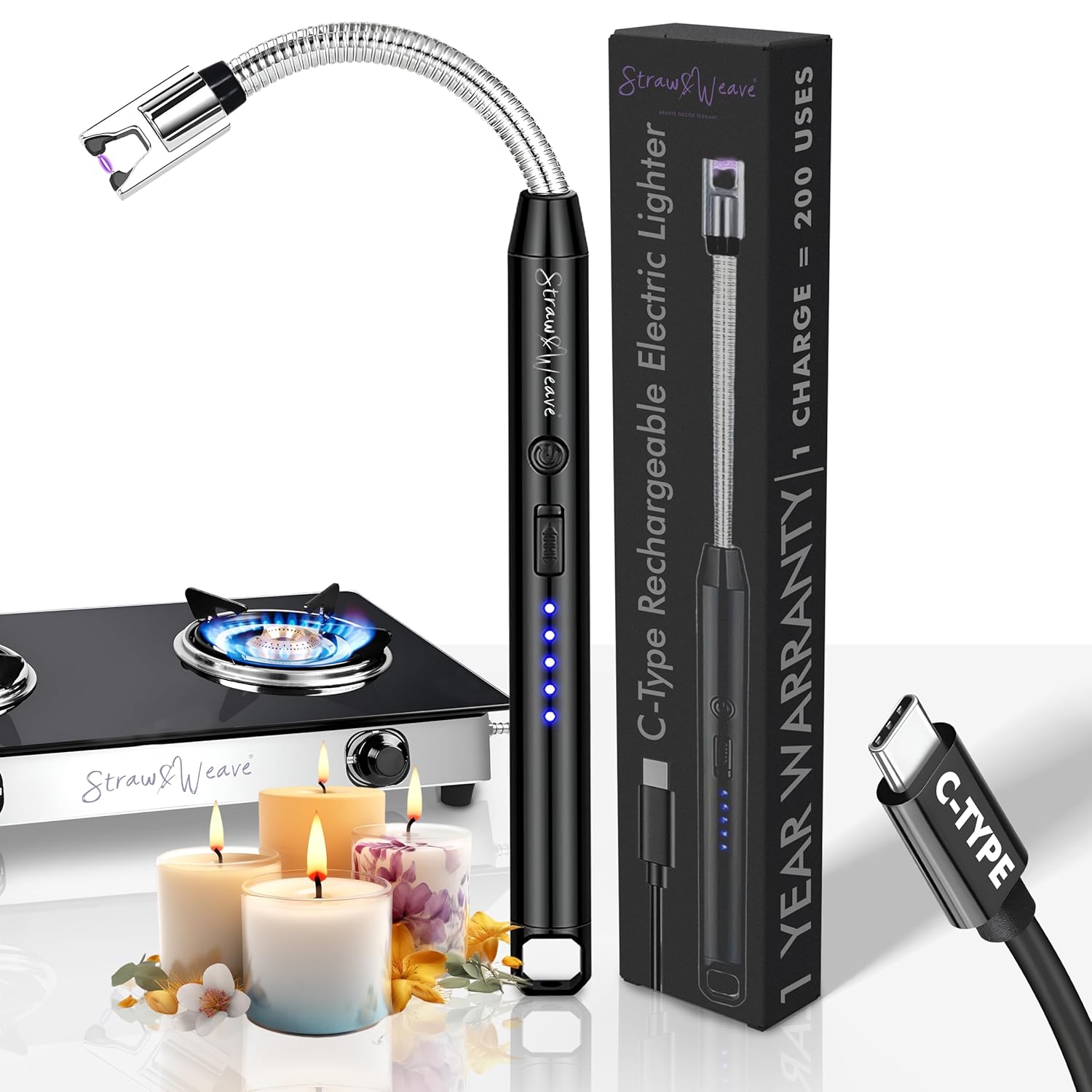
Neck flexibility. This is the feature that decides how much you like the thing day to day. A rigid arc lighter forces your hand close to the burner. A flexible neck bends into a back burner or down towards a diya on the floor without you turning your wrist over the flame. If you have a four-burner stove, a flexible neck is worth paying for.
Single arc or double arc. A double arc covers a slightly wider area, which helps with a stubborn wick or a thick candle. For lighting a gas stove, a single arc is entirely sufficient and generally cheaper.
Charging port. USB-C is what you want, so the lighter charges off the same cable as everything else in the house. A micro-USB lighter means keeping an old cable in a kitchen drawer for one device.
Safety catch. A slide lock or a two-step trigger matters if there are children in the house, because unlike a gas lighter there is no fuel to run out as a natural limit. The arc is also silent and small, which makes it easier for a child to fire without anyone noticing.
Battery indicator. A small LED strip showing charge saves you from discovering it is flat when the pressure cooker is already on.
Warranty. Electrodes and the charging circuit are the parts that fail. A stated one-year warranty from a seller with real volume is a reasonable filter in a category with many identical-looking units.
Where it genuinely helps
Daily stove lighting is the obvious one, and the value is that it just works every single time for weeks between charges. There is no slow decline in performance the way a gas lighter has, where it gets worse for a month before you replace it.
Pooja use is the case people mention most in reviews. Lighting a row of diyas or an agarbatti with a matchstick means burnt fingers and ash on the floor. A flexible neck reaches each one without either.
Anything outdoors or in wind works far better than a flame. Balcony grills, a candle during a power cut with the fan still spinning down, and the kitchen window open during the monsoon are all cases where a gas lighter fights you.
Households that go through lighters quickly save real money. At Rs 259, an arc lighter costs about what four or five refillable lighters cost over a year, and it does not leave five dead plastic bodies behind.
Where it disappoints
It is another thing to charge, and it is the only thing in your kitchen that needs charging. If your household is bad at remembering chargers, keep a matchbox as backup and accept the hybrid.
The arc is small and reaches only a centimetre or so. Lighting a deep candle in a tall glass jar, or a wick that has sunk below the rim, is harder than with a long gas flame. A flexible neck helps but does not fully solve it.
It struggles with anything that needs sustained heat. A gas flame held under a stubborn charcoal piece for twenty seconds is doing something an arc that cuts off after a few seconds cannot easily match.
The tip is delicate. Electrodes bend if you jab them at a burner, and residue from oily kitchen air builds up on them, which weakens the arc. Both are fixable with care, neither is obvious to a first-time buyer.
Who should skip it: anyone who mainly lights barbecue charcoal or a tandoor, anyone with young children and no lock on the model they are considering, and anyone who genuinely will not remember to charge it. A good refillable gas lighter is not a bad product, and for those three cases it remains the right one.
Keeping it working
Wipe the electrodes with a dry cotton bud every few weeks. Kitchen air deposits a thin oily film that makes the arc weak and inconsistent, and cleaning it restores full strength.
Do not touch the tip to the burner. Let the arc do the work from a few millimetres away. Pressing the metal against the pan support is what bends the electrodes.
Charge it before it goes fully flat, and do not leave it plugged in on the counter for days. Both habits shorten the life of small lithium cells.
Store it away from the stove itself. It is a sealed electronic device, and sitting in the direct heat rising off a burner all day is not good for the battery.
The one we have listed
We currently list the STRAW&WEAVE Rechargeable Electric Arc Gas Lighter at Rs 259 on Amazon.in against a Rs 599 MRP, rated 4.4 stars across 7,605 ratings. It charges over USB-C, has a 360-degree flexible neck, and carries a one-year warranty. The rating count is high enough to take seriously, which is unusual in this category. It suits daily stove and pooja use. It is not the tool for charcoal.
While you are in the kitchen, two other things worth a look: a gas cylinder trolley if moving the cylinder to clean behind it is a two-person job in your house, and a plug-in LPG gas leak detector, which is the single cheapest safety upgrade an Indian kitchen can make.
Common questions
How long does a charge last?
Typical daily kitchen use, meaning a handful of lights a day, runs for a few weeks between charges. Heavy use during a festival week will drain it faster.
Is the arc dangerous to touch?
It will give you a sharp burn if you put a finger across the electrodes while it fires. It is not a shock hazard in normal use, but it is not a toy, and a model with a lock is worth it in a house with children.
Can it light a candle or incense?
Yes, and it is better than a match for both because there is no falling ash and no burnt fingers. Deep candles in narrow jars are the exception.
Does it work during a power cut?
Yes, as long as it is charged. That is one of its better arguments, since a power cut is exactly when you are reaching for candles.
Disclosure: TechBelievers lists products from Amazon.in and other stores as an affiliate. If you buy through our links we may earn a commission, at no extra cost to you. Prices are checked periodically and change often on the store's own site.