Clip-On Reading Lights: What to Look For Before You Buy
The overhead light problem
You are three chapters in, it is past eleven, and the tube light is doing that thing where it makes the whole room feel like a waiting area. Switch it off and you cannot see the page. Leave it on and the person next to you turns over for the fourth time. Reading in bed in an Indian house usually means choosing between a harsh ceiling light and giving up.
A clip-on reading light is a Rs 300 answer to a problem that otherwise costs you either the reading or the goodwill. It is a small enough purchase that the interesting question is not whether to buy one but which kind, because the cheap ones fail in specific and predictable ways.
How these lights are built
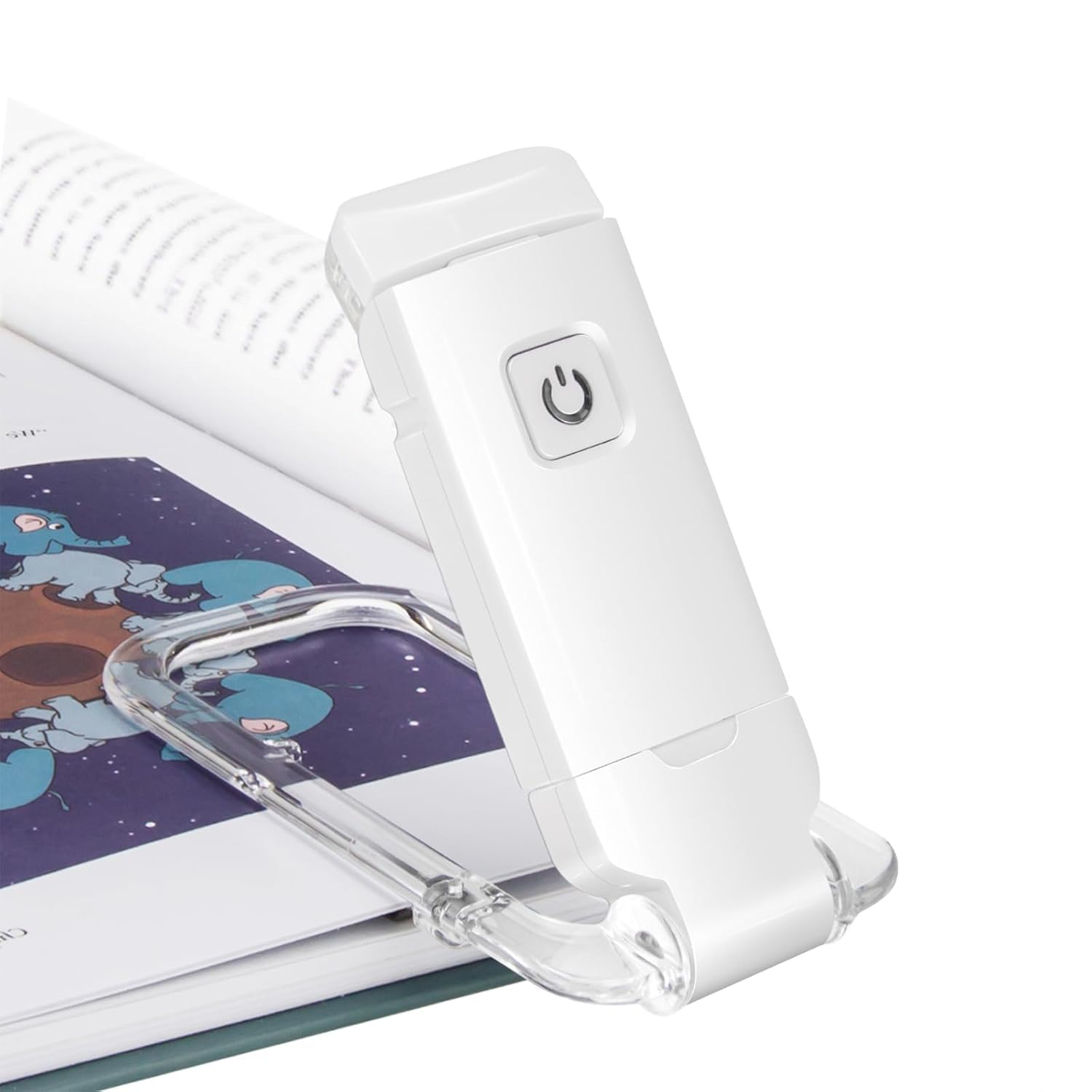
The whole category is the same three parts: a set of small LEDs on a head, a flexible gooseneck, and a spring clip with a lithium cell inside the base. The differences between a good one and a bad one come down to how each part is made rather than any clever technology.
The LEDs are usually surface-mounted chips behind a diffuser strip. More chips spread across a wider strip means softer light on the page. A single bright emitter produces a hot spot and a lot of glare bouncing off glossy paper. This is why a light with several dim LEDs often reads better than one with two bright ones.
The gooseneck is a metal spiral inside a rubber or silicone sleeve. Cheap ones lose their memory after a few hundred bends and start sagging under the weight of the head. This is the single most common failure in the category, more common than battery death.
The clip is where the money should go. A weak spring, or a spring with hard plastic jaws, will either slide off a paperback or crease the cover. Padded jaws and a strong spring are worth more than an extra brightness level.
The specs that matter
Colour temperature. This is the one that actually matters for night reading. Cool white light around 6000K keeps you alert, which is the opposite of what you want at midnight. Warm light around 2700K to 3000K is easier on the eyes in a dark room and less likely to keep you up. Lights that offer both, plus a neutral middle, are worth having.
Brightness levels. More than three levels is marketing. What you want is a lowest level that is genuinely low. Many lights bottom out far too bright for a fully dark room, and you end up squinting at a glowing page.
Memory of last setting. A light that always starts at maximum cool white, at 1am, in a dark bedroom, is a small daily punishment. Units that remember the last mode are noticeably nicer to live with.
Charging port. USB-C is the sensible ask now. Plenty of these still ship with micro-USB, which means keeping a legacy cable alive purely for one device.
Runtime. Quoted figures are always at the lowest brightness. Assume real use gives you a fraction of the headline number. For a reading light this is rarely a problem, since you charge it in an afternoon and it lasts weeks of ordinary use.
Where it genuinely helps
Shared bedrooms are the obvious case, and the one most people buy for. A warm, narrow beam aimed down at a page throws very little light sideways.
It is also good in the specific Indian situation of a power cut during exam season or a deadline. A charged clip light is a small, aimed, usable work light when the inverter is busy running the fan and you do not want to burn the emergency bulb on one desk.
Beyond books, these clip onto a music stand, a laptop screen edge for typing in a dark room, a sewing table, or the sun visor of a car when someone is reading a map or a form. The clip is more versatile than the product name suggests.
Where it disappoints
It will not clip to everything. Thick hardbacks, tablet cases and the rolled edge of a mattress defeat most jaws. Measure the opening before assuming it will work on the thing you have in mind.
It is a bad general-purpose light. The beam is narrow by design, so using one as a room light or for anything requiring accurate colour is a frustrating experience.
The head is heavy relative to the neck. Clip it to a floppy paperback cover and the whole assembly slowly droops as you read. Clipping to something rigid, like the headboard or a book stand, works far better than clipping to the book.
And on genuinely cheap units, the switch is the weak point. A single button cycling through brightness and colour modes gets pressed thousands of times and eventually stops registering cleanly.
One general note rather than advice: if eye strain or headaches while reading are a recurring problem for you, a lamp is not the fix to chase on your own. This is general information and not medical advice; it is worth an eye test.
Living with one
Charge it in daylight hours, not when you want to read. Most of these cannot be used comfortably while tethered to a power bank on the bed.
Aim the head down at the page from above and slightly to the side, not straight on. Direct light on glossy paper reflects back into your eyes and is the usual reason people find these tiring.
Do not leave it clipped permanently. The spring weakens under constant tension, and the jaws leave a mark on book covers over months.
If the neck starts sagging, a couple of turns of electrical tape around the base of the gooseneck stiffens it enough to buy another year.
The one we have listed
We have a Rechargeable Clip-On Book Reading Light listed at Rs 329 on Amazon.in, rated 4.3 stars across 800+ ratings. It bends where you point it, offers warm brightness levels, and runs off a rechargeable battery, so you can read late without lighting the whole room.
At Rs 329 the calculation is easy. This is roughly the price of two coffees, and the failure mode if you dislike it is that you have a spare emergency light in a drawer. The rating is good rather than exceptional, which is about right for a category where the neck and the clip decide everything and both are hard to judge from photos.
Skip it if you read exclusively on a backlit tablet or phone, if you have your own room and a decent bedside lamp already, or if you want something to light a whole desk. For a desk, a wider fixture is the correct tool.
If your actual problem is light in a dark corridor or cupboard rather than on a page, the motion sensor light bar fits better. And for reading through a power cut specifically, an inverter LED bulb with battery backup lights the room rather than the page.
Common questions
Warm or cool light for reading at night?
Warm, around 2700K to 3000K. Cool white keeps you alert and is harder on the eyes in an otherwise dark room.
How long does the battery last?
Quoted runtimes are measured at the lowest brightness. Expect meaningfully less at higher settings, though a full charge still covers several nights of normal reading.
Will it clip onto a hardback or a tablet?
Often not. Most jaws open only a couple of centimetres. Clipping to a headboard, shelf edge or book stand is more reliable than clipping to the book itself.
Can I use it while it charges?
Many models allow it, but the cable makes it awkward in bed. Plan to charge during the day.
Disclosure: TechBelievers lists products from Amazon.in and other stores as an affiliate. If you buy through our links we may earn a commission, at no extra cost to you. Prices are checked periodically and change often on the store's own site.