Bluetooth FM transmitters: getting phone audio into an older car stereo
You get into the car, put the phone in the holder, start the playlist, and then remember: the only way this car plays your music is through a phone speaker facing the ceiling. The stereo in front of you is a perfectly good four-speaker system that will play FM radio and a CD you no longer own. Somewhere between those two facts is an hour of driving with tinny audio and a call you take on speakerphone while everyone shouts.
The fix most people assume they need is a new head unit — an Android screen, an installer, a morning at the accessories market, eight thousand rupees and up. The fix a lot of people actually need costs a fraction of that and plugs into the 12V socket.
How an FM transmitter actually works
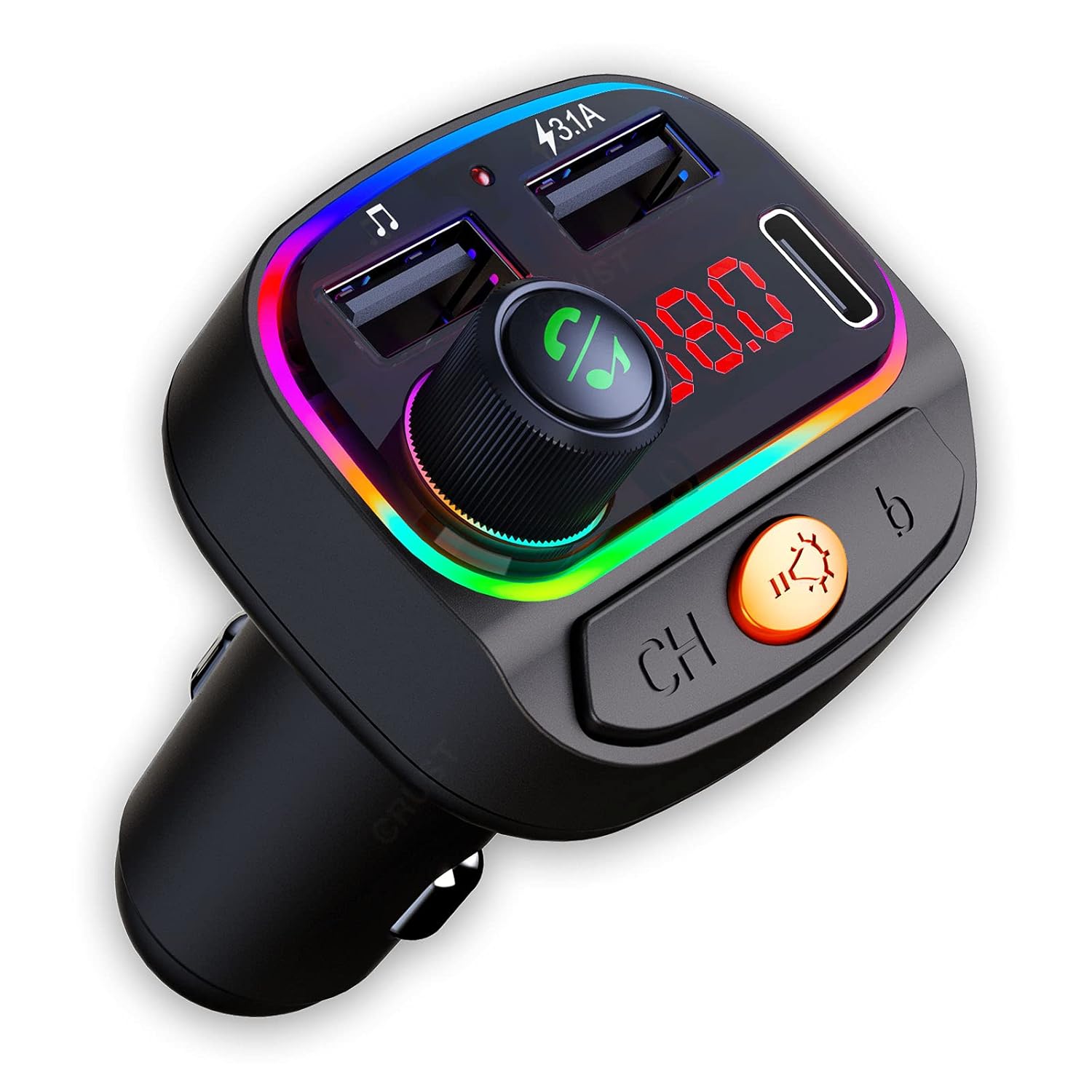
A Bluetooth FM transmitter is a small dongle that draws power from your car's cigarette lighter socket. Your phone pairs to it over Bluetooth exactly as it would to a speaker. The dongle then takes that audio and broadcasts it as a very weak FM radio signal, over a distance of about a metre. You tune your car stereo to that same frequency and the stereo hears it as a radio station.
That is the entire trick, and it explains both why these things work everywhere and why they are never perfect. Any car with an FM radio has a receiver, and that is all this needs. It does not care about the make, the model or the year. But it is radio, so it inherits radio's problems.
Most units also carry a microphone for hands-free calls, a USB port or two for charging, and often a slot for a memory card or a USB drive if you want to play music without involving the phone at all.
The things that decide whether it sounds good
Where it genuinely helps
The obvious case is an older car or a base-variant hatchback with an FM-only head unit. For under a thousand rupees you get Spotify, podcasts and navigation prompts through the car speakers instead of through a phone lying in a cupholder.
The less obvious case is a car you do not own. Rentals, self-drive cars, a relative's car on a long weekend — a transmitter fits in a bag, plugs in, and works in whatever you get given. Nothing is wired, nothing is left behind. That flexibility is genuinely useful and no installed head unit can match it.
It also helps with navigation more than people expect. Having Maps announce a turn through the car speakers, over the music, at a volume you can actually hear, changes how much you look at the screen.
Where it disappoints
Audio quality is FM quality, and FM is a lossy, compressed, mono-ish way to move sound. It is fine for podcasts and perfectly acceptable for music in a moving car with road noise. Next to a wired AUX connection or a proper Bluetooth head unit, it is a clear step down, and if you care about music you will hear it.
Interference is the real annoyance. Drive between cities and the frequency you chose at home may be occupied by a local station forty kilometres later, at which point your music gets a bed of Hindi film songs under it. You retune, and it happens again. On long intercity drives this gets old.
Hands-free calling is usable but not good. The person on the other end will know you are in a car. It is safer than holding a phone; it is not a conversation you want to have with a client.
And these devices occupy your 12V socket, which in most Indian cars is the only one.
Who should skip this. If your car already has Bluetooth or an AUX input, use that instead — both sound better. If you have a modern car with CarPlay or Android Auto, this is a downgrade in every direction. If you are particular about audio, save towards a head unit rather than spending on a workaround you will resent. And if your commute is intercity rather than in-city, the retuning will wear you down.
Getting the best out of one
Spend ten minutes finding your frequency properly. Park, tune the stereo across the band, and look for a spot with clean silence rather than faint music — faint music means a station is there and it will get louder somewhere along your route. The bottom and top ends of the band are usually emptiest.
Set the phone volume high and the stereo volume moderate. Transmitters have a fixed output, so if the phone is quiet you will end up turning the stereo up until you are amplifying hiss along with the music.
Keep a second frequency in mind for your usual long route, and store both as presets on the stereo so switching is one button rather than a hunt.
Unplug it when the car is parked for days. Some 12V sockets stay live with the ignition off, and a dongle sitting there is a small but real drain on an older battery. In the summer, take it inside rather than leaving it to cook on the dashboard.
The one we have listed
We currently list the CRUST CS30 Car Bluetooth FM Transmitter and Call Receiver at Rs 689, down from Rs 999, on Amazon.in. It plugs into the 12V socket, pairs over Bluetooth 5.3 and rebroadcasts phone audio on a blank FM frequency, with hands-free calling built in. It carries a 4.1 star rating across 6,464 ratings, which is a large enough sample to be worth something — and note that 4.1 rather than 4.5 is about right for a category where interference is a fact of life.
Check where your 12V socket sits before ordering, and set your expectations at "much better than a phone speaker" rather than "as good as a new stereo".
If you are sorting out the front of the car generally, the other two things worth having are somewhere to put the phone and somewhere to put everything else. We also list a Portronics car mobile holder and a back seat organiser.
Common questions
Will it work in any car?
Any car with an FM radio and a 12V socket, which covers almost everything on Indian roads. If the car has no working 12V socket, some models can be powered from a USB port instead, but check before buying.
Why does my audio have static or a station bleeding through?
The frequency you picked is not empty where you are. Retune to a clearer one, ideally at the far end of the dial. This is normal behaviour for the technology, not a fault in the device.
Is it better than an AUX cable?
No. A wired AUX connection sounds better and has no interference. A transmitter is for cars that have no AUX input, or when you want to avoid a trailing cable.
Can I use it for calls safely?
It routes calls through the car speakers and its own microphone, which is safer than holding a phone. Quality is average, and you should still pull over for anything that needs your attention.
Disclosure: TechBelievers lists products from Amazon.in and other stores as an affiliate. If you buy through our links we may earn a commission, at no extra cost to you. Prices are checked periodically and change often on the store's own site.