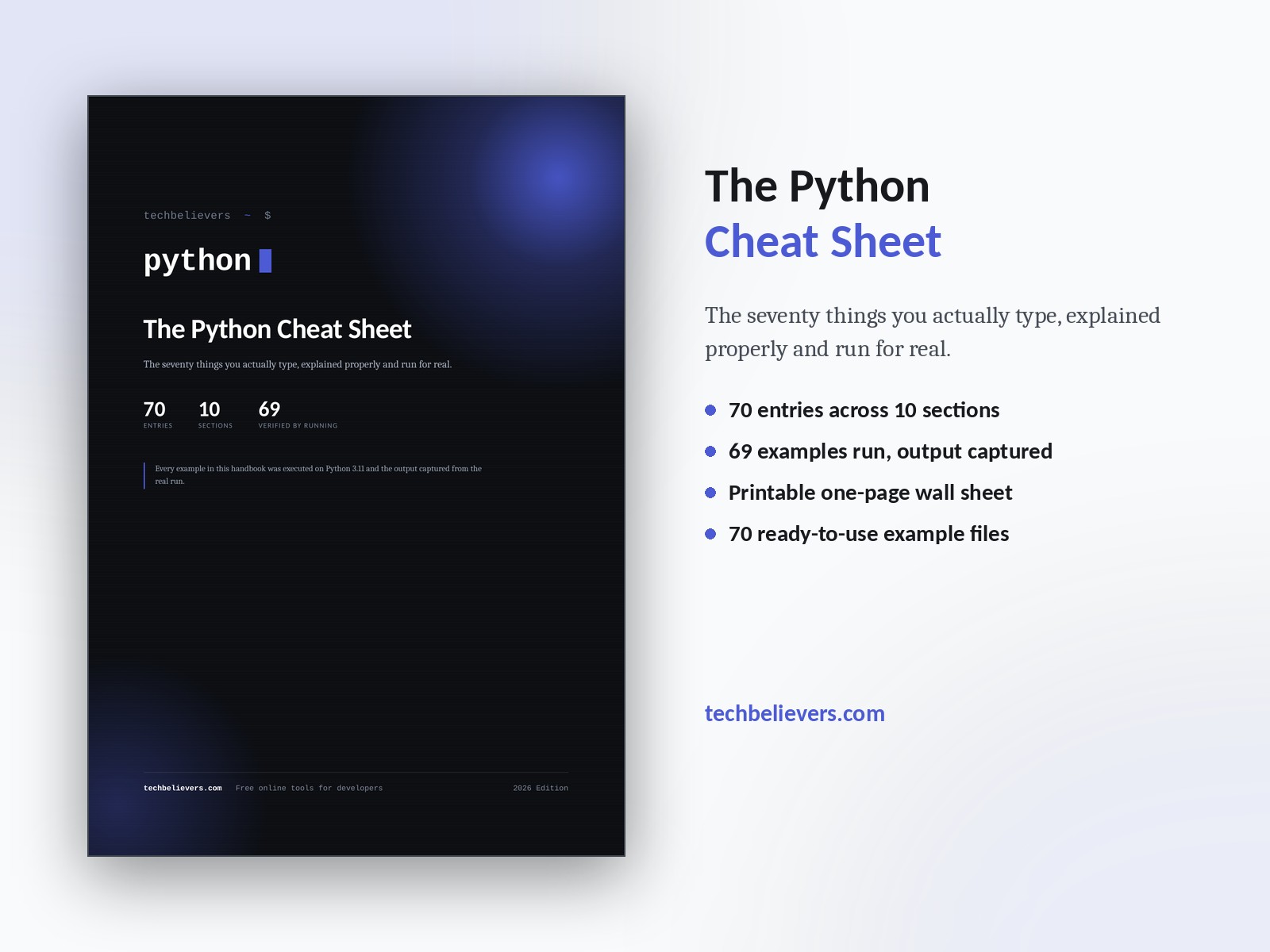
You can write Python. You still google f-strings.
70 Python entries with the part every other cheat sheet leaves out — why you reach for it, and the specific way it bites you. 69 of the examples were executed on Python 3.11 and the book prints what they actually returned.
- handbook.pdf — 70 entries across 10 sections, 83 pages
- wall-sheet.pdf — the whole toolkit on one page, built for printing
- examples/ — 70 ready-to-use files, one per entry, grouped by section
- Captured output on 69 examples — what Python 3.11 actually printed
- A mental-model paragraph opening every section
- "Watch out" on every entry — the specific way each one bites people
- "See also" on every entry — the related flags worth knowing next
- Licence covering commercial use of every example file
- Free updates to the 2026 edition
One-time payment · No subscription
- Format
- ZIP · 787 KB
- License
- Single-user license
- Version
- 1.0 · updated 25 Sep 2026
- Delivery
- Instant download
- Format
- ZIP
- Size
- 787 KB
- License
- Single-user
- Version
- v1.0
Processed by Razorpay. Card details never touch our servers.
Download right after checkout in your Library.
ZIP files · 787 KB. Clear usage terms.
Stuck? A real person answers — reach us from the contact page.
How it works
-
1
Pay securely
UPI, cards or net banking through Razorpay. Takes under a minute.
-
2
Download instantly
Your download unlocks the moment payment confirms. No waiting for an email.
-
3
Keep it in your Library
Re-download from My Account.
About this product
You have written Python for a while now. You can build the thing. And you still open a browser tab to check whether the colon goes before or after the number in an f-string, what a negative slice step does, and why your default argument kept the value from the last call.
Most cheat sheets do not help with that, because a list of flags tells you what to type and never why. This one is built the other way round. Every entry answers four questions:
What it does — one sentence, in plain English.
Why you reach for it — the model underneath, so the next command becomes obvious instead of needing another search.
What it looks like — a complete, self-contained example.
How it bites you — the specific mistake people actually make with this one.
Every example was actually run. 69 of the 70 examples in this handbook were executed on Python 3.11 while it was being built, and the box underneath each one shows exactly what the machine printed — not what somebody typed from memory. The same examples ship as files you can run yourself.
70 entries across 10 sections:
01 — Strings and f-strings
02 — Lists, tuples and slicing
03 — Dicts and sets
04 — Control flow that reads well
05 — Functions
06 — Files and paths
07 — Errors and debugging
08 — Classes and dataclasses
09 — Iterators, generators and itertools
10 — The standard library you actually use
What you get:
handbook.pdf — 70 entries, 83 pages, a mental-model paragraph opening every section
wall-sheet.pdf — the whole toolkit on one printable page, built to live next to your monitor
examples/ — 70 ready-to-use files, one per entry, grouped by section
Your own licence — the example files are yours to use in your own work, including paid client work
Written for developers and students who can already write a loop, and want to stop re-googling f-strings, slicing, dicts and generators every week.
- Format
- ZIP · 787 KB
- License
- Single-user license
- Version
- 1.0 · updated 25 Sep 2026
- Delivery
- Instant download
Questions people ask before buying
How is this different from the free Python cheat sheets online?
Free cheat sheets are lists. They tell you what to type and nothing else, which is why you end up looking the same thing up every few weeks. Every entry here explains why you would reach for it and how it goes wrong, and every section opens with the model behind it. That is the part that makes it stick.
Is this for beginners?
No, and it does not pretend to be. It assumes developers and students who can already write a loop, and want to stop re-googling f-strings, slicing, dicts and generators every week — if you have never written any Python, start with a tutorial and come back.
Were the examples actually tested?
Yes — 69 of the 70 were executed on Python 3.11 while this handbook was built, and the output printed in the book is what those tools returned. The same examples are in the download as files you can run yourself and check.
What exactly do I get after I pay?
A single zip with four things: handbook.pdf (83 pages), a printable one-page wall sheet, an examples/ folder with 70 ready-to-use files, and your licence. Instant download, no waiting.
Can I use the example files in my own projects?
Yes. The licence covers using, modifying and building on every example file in your own projects and in paid client work. The only thing you cannot do is resell the handbook itself.
Verified buyer reviews
Reviews here come only from people who bought the product — nothing is imported or written for us.
No written reviews yet. Only verified buyers can review.
Ready to ship faster?
Download The Python Cheat Sheet now and use it on your next project.
You might also like
View all →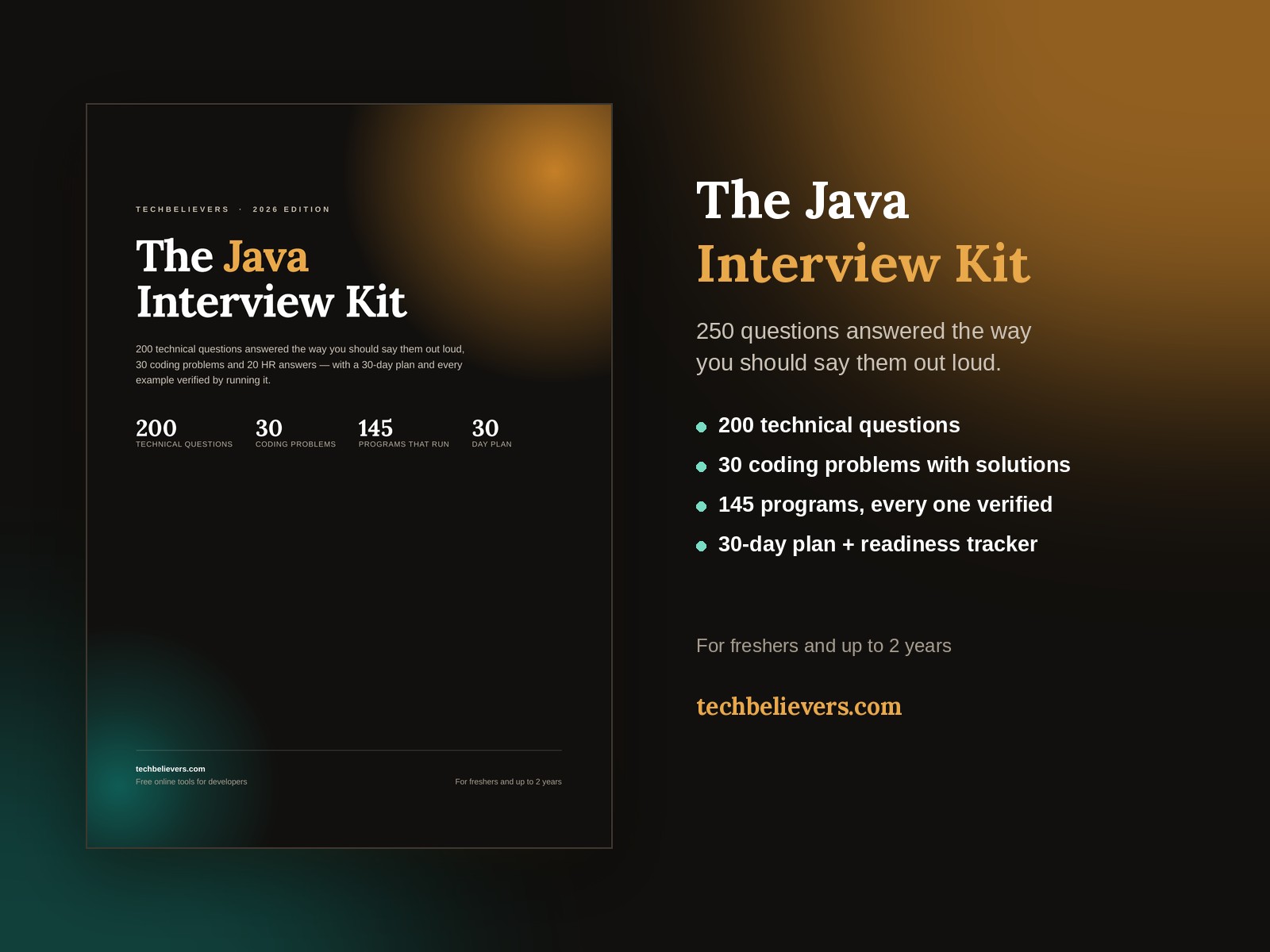 ⭐
⭐
Java Interview Kit — 250 Questions & Answers
Core Java, collections, concurrency, Spring Boot and the coding round — answered the way you should say them out loud.
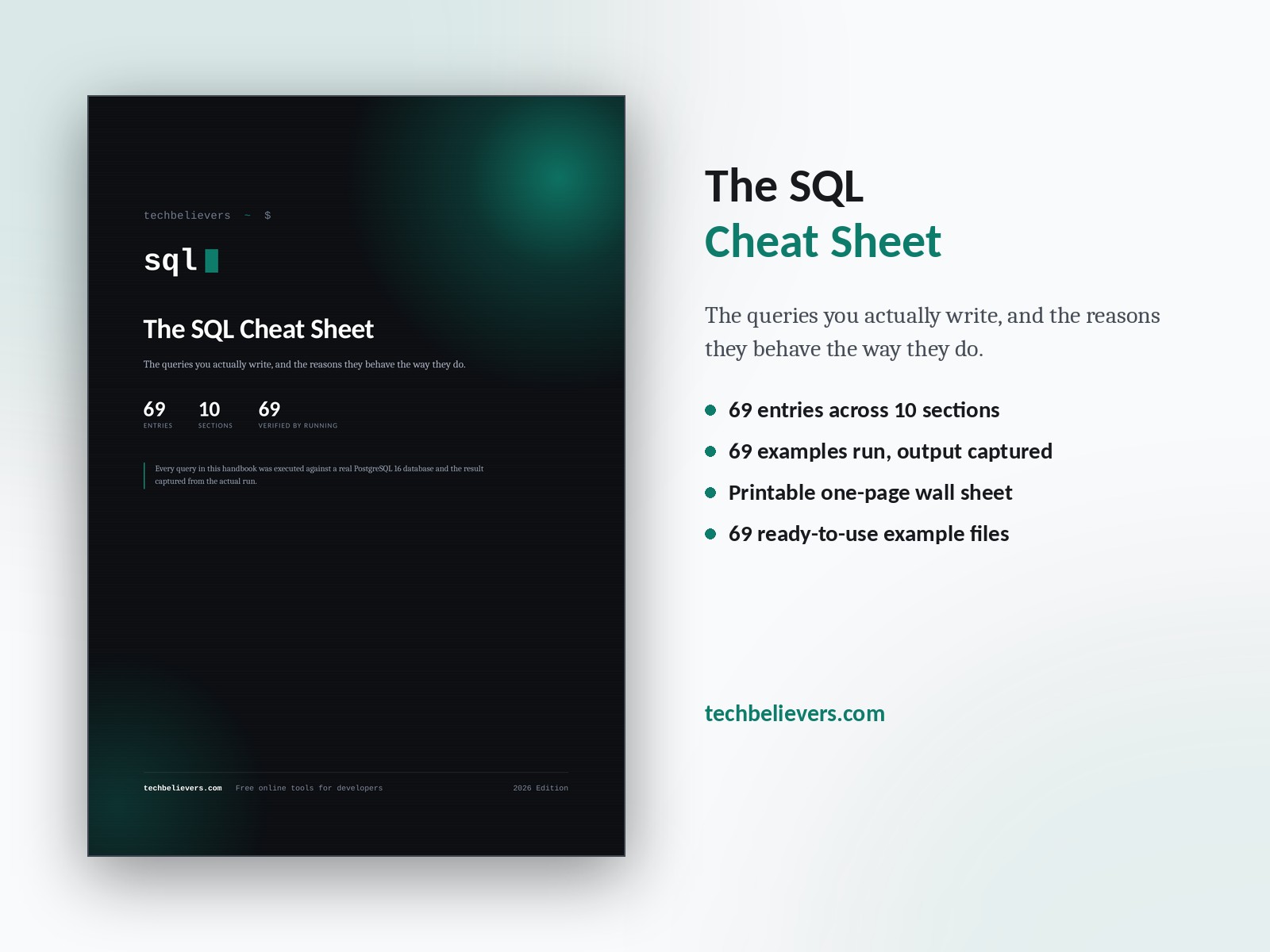
The SQL Cheat Sheet
69 entries. Not a list of commands. what each one does, why you reach for it, and the way it bites you.
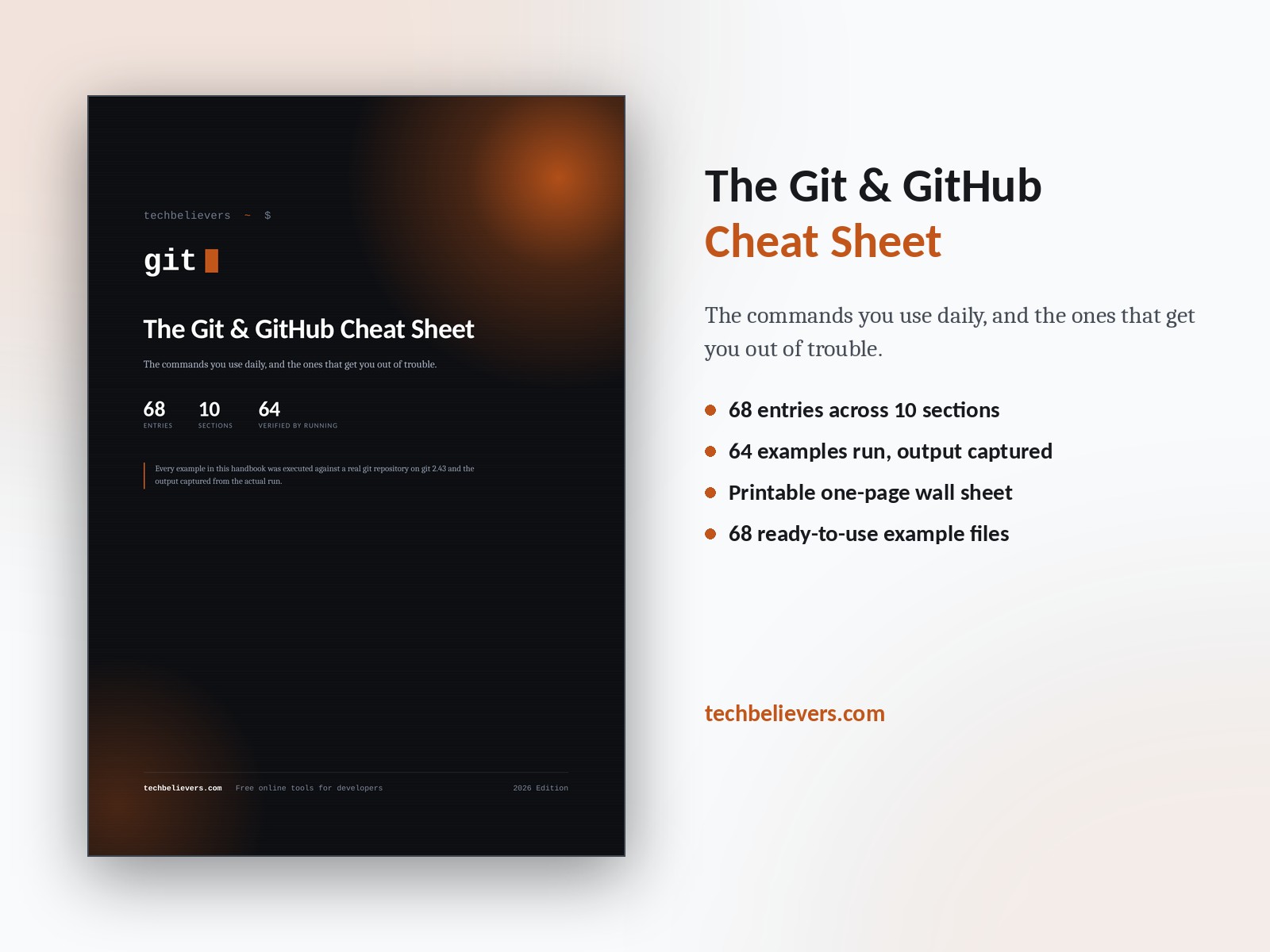
The Git & GitHub Cheat Sheet
68 entries. Not a list of commands — what each one does, why you reach for it, and the way it bites you.
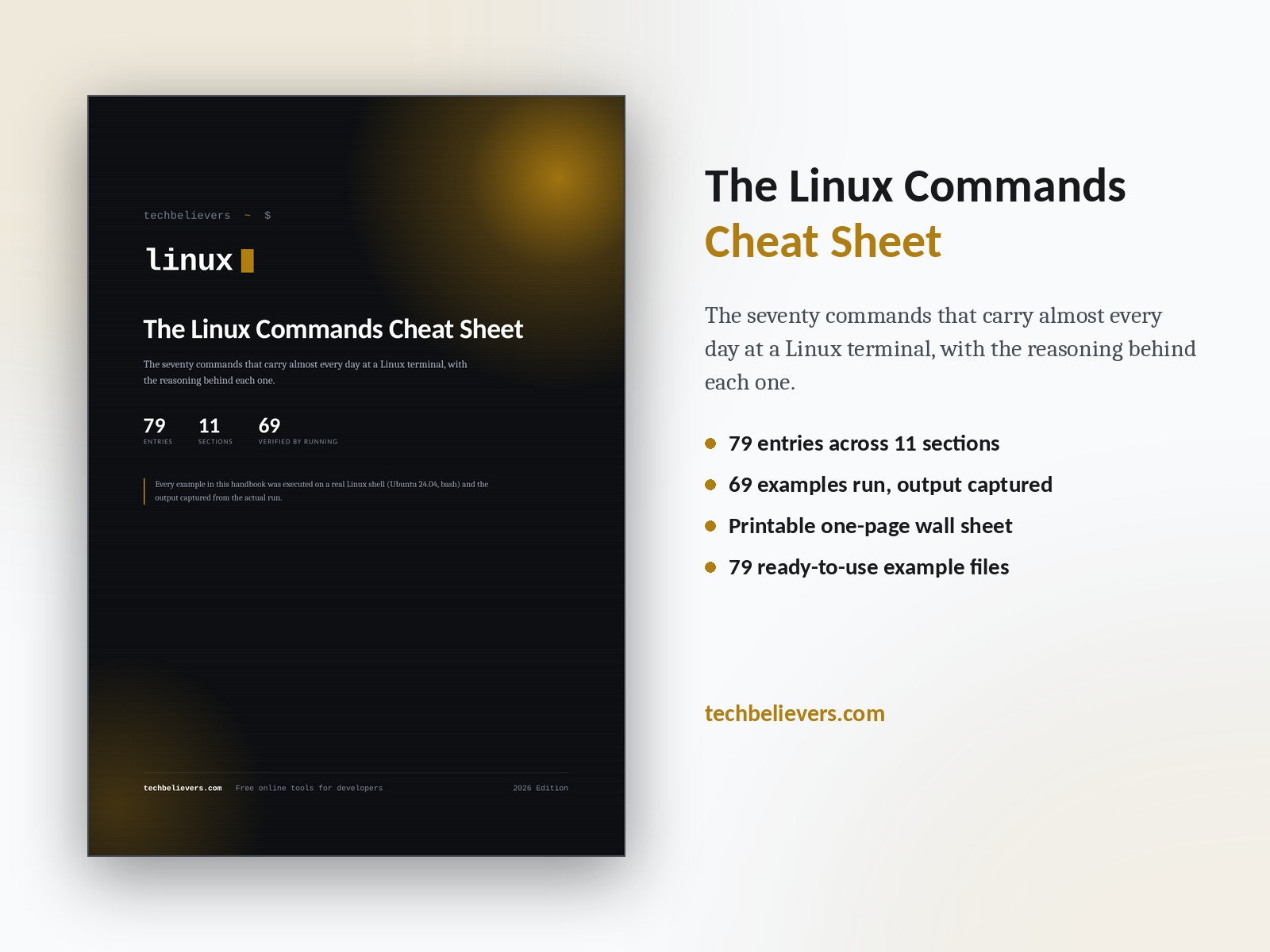
The Linux Commands Cheat Sheet
79 entries. Not a list of commands — what each one does, why you reach for it, and the way it bites you.